
Last updated November 22, 2026
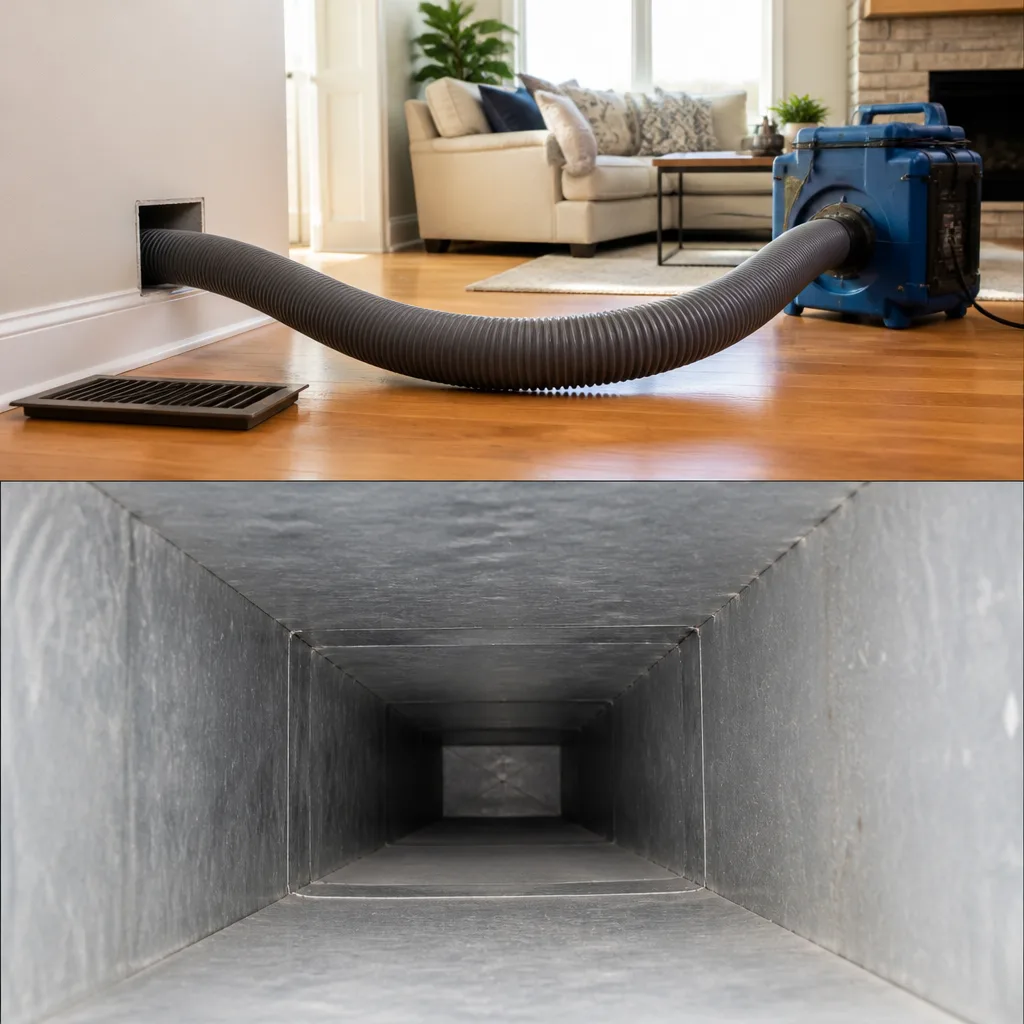 Whole-home duct cleaning
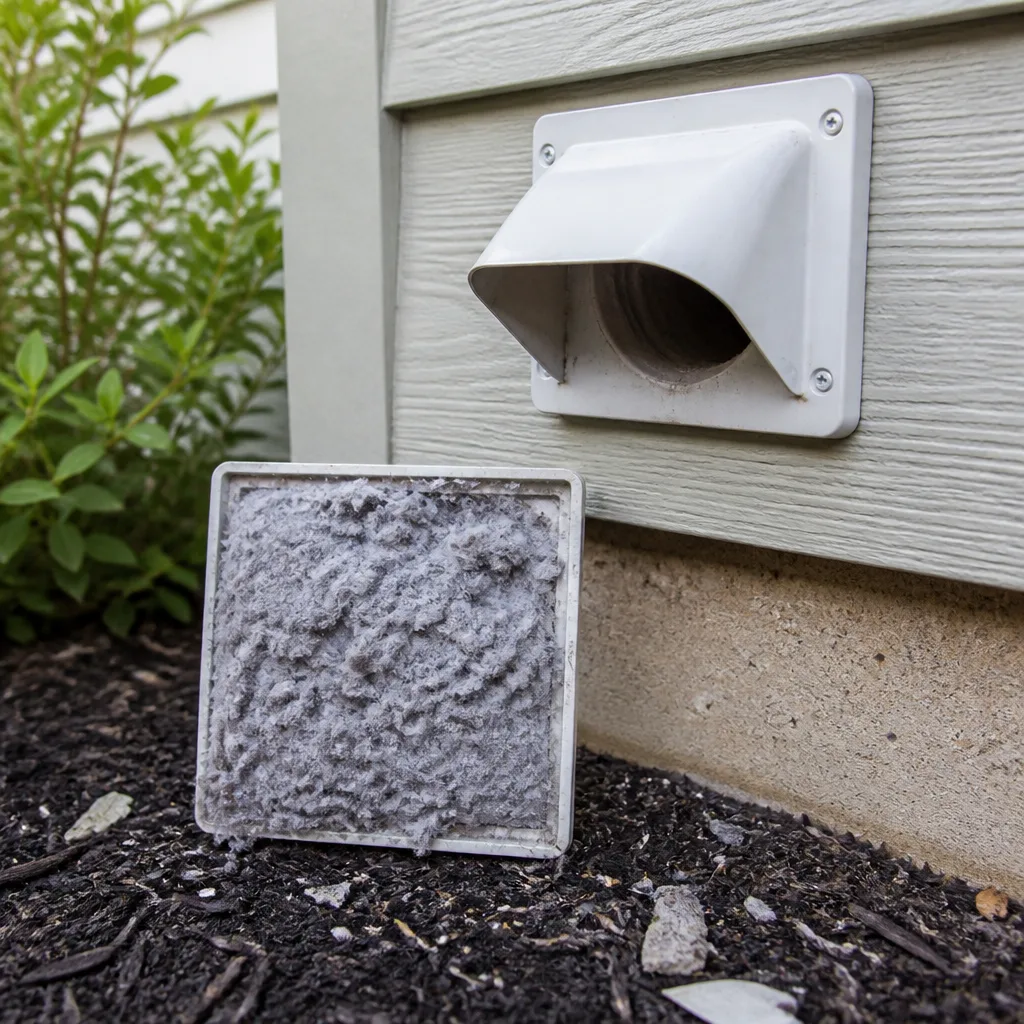 Dryer vent cleaning
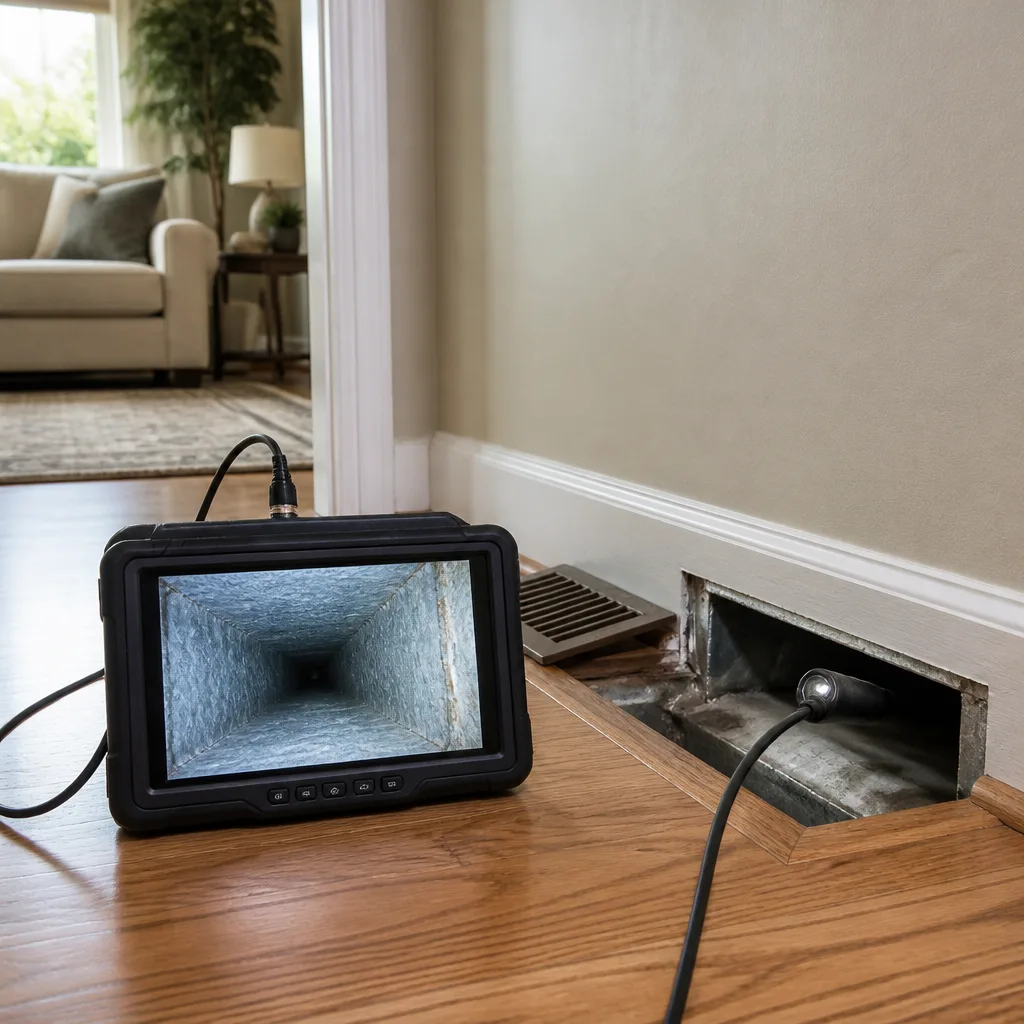 Camera inspection
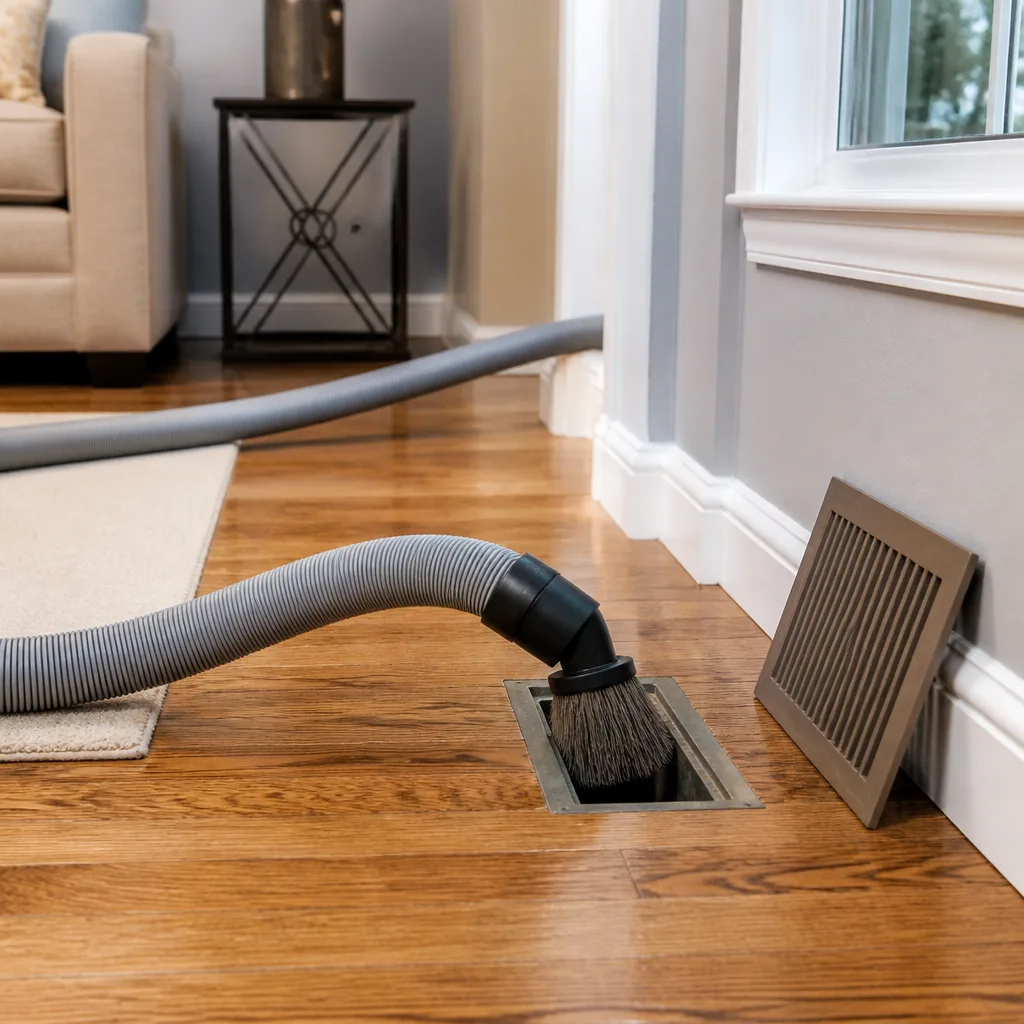 Sanitizing & deodorizing
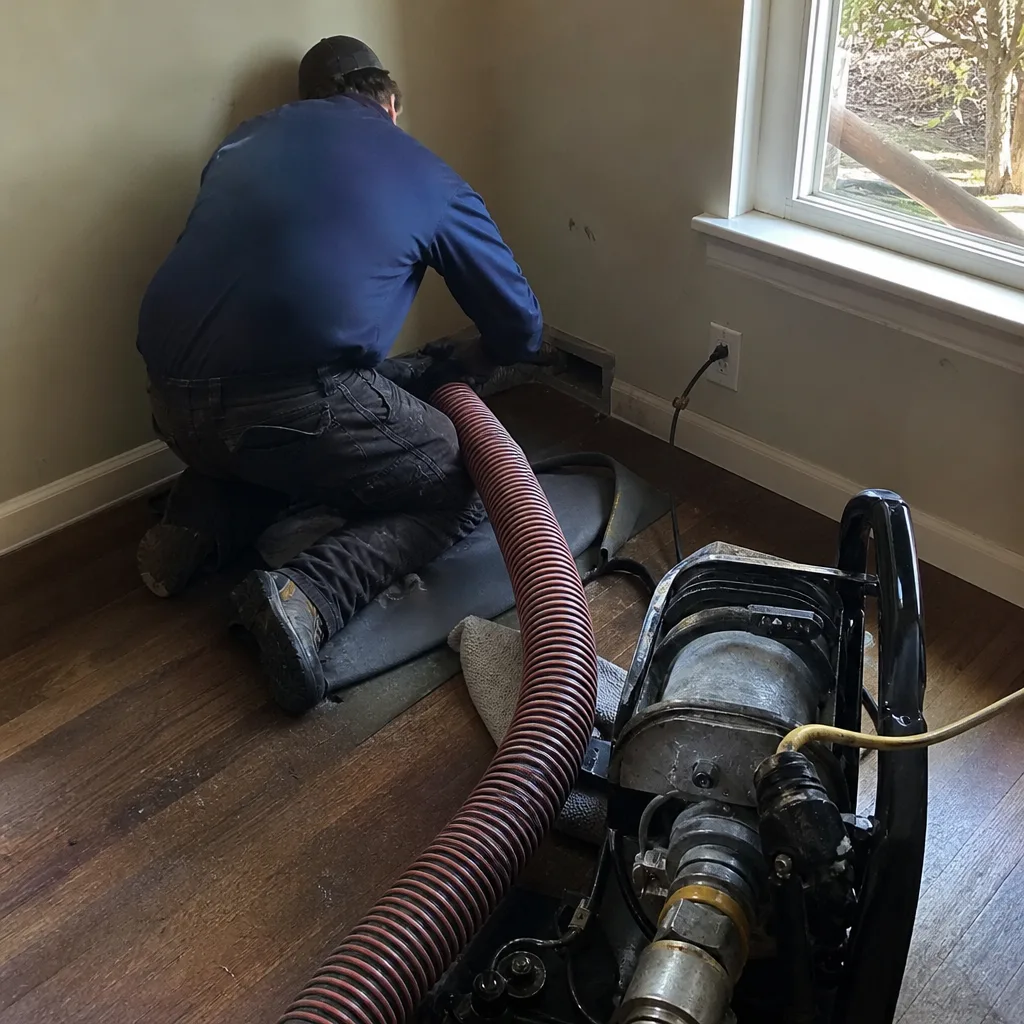
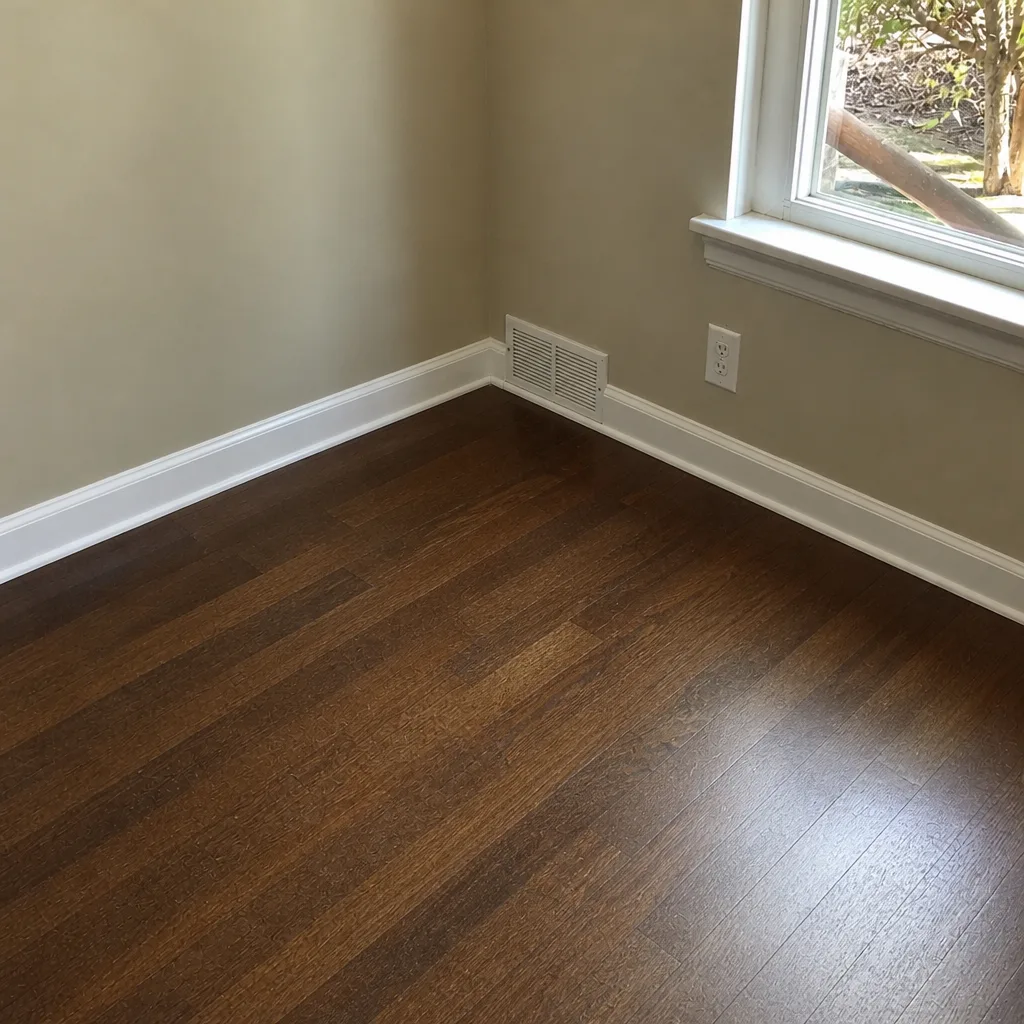
Whole-system duct and dryer vent check with before-and-after photos - you see exactly what came out of your vents
That "$99 whole-house special" is a bait ad - the real number appears once they are in your hallway, or the "clean" is a shop-vac at the register. We photograph the inside of your ducts before and after instead.
Air Duct Cleaning Troubleshooting in Capitol Hill: Common Problems and How to Fix Them
If you’ve had your ducts cleaned twice in three years and the dust is already back, the problem was never the ducts – it was the diagnosis. Most homeowners in Capitol Hill treat duct cleaning as a reset button: pay for the service, watch the dust settle back within a season, and conclude that cleaning doesn’t work. What actually failed was the troubleshooting step that should have come before anyone ran a brush through the system. A musty smell is not always a dirty duct. A dust film on the furniture is not always a cleaning failure. And a vent with weak airflow is not a vent problem at all most of the time. This guide walks through the symptoms Capitol Hill homeowners describe most often, maps each one to its real root cause, and explains what actually fixes it.
Styles & brands we work with
- Whole-home duct cleaning
- Dryer vent cleaning
- Camera inspection
- Sanitizing & deodorizing
Quick Answer
Most air duct problems in Capitol Hill trace back to one of three sources: contamination inside the duct system, a filtration or sealing failure at the equipment or envelope, or a static pressure imbalance in the HVAC unit itself. Cleaning fixes the first. Sealing and filtration fix the second. The third is an HVAC design issue that no amount of cleaning will solve permanently. Correct diagnosis before the job is what separates a duct cleaning that holds for years from one that has to be repeated.
Table of Contents
- Symptom-to-Cause Map: What Each Problem Actually Means
- Contamination Problem vs. Air Quality Problem: How to Tell Them Apart
- Persistent Musty Odors After a Cleaning: Why It’s Usually Not the Ducts
- How Pre-1980 Capitol Hill Housing Creates Specific Duct Leakage Patterns
- Debris Re-Entrainment vs. New Contamination: Two Very Different Failures
- When a “Dirty Duct” Is Really a Static Pressure Imbalance
- The Five-Step Diagnostic We Run Before Any Cleaning Job
- Why Duct Repair and Sealing Belongs in the Same Job
- Common Mistakes to Avoid
- When to Call a Professional
- Frequently Asked Questions
- The Bottom Line
Symptom-to-Cause Map: What Each Problem Actually Means
Before anyone touches a vent, the symptom needs to be sorted into a category. In our experience across Capitol Hill, the same complaint (“my house is dusty”) can come from a duct full of debris, a leaking return in a crawlspace, or an oversized system pulling air through gaps in the envelope. The fix is completely different in each case. Here is how the mapping usually breaks down:
- Dust settling on horizontal surfaces within days of cleaning: usually a return-side leak or an unsealed plenum, not the supply ducts. Dust is being pulled in from an unconditioned space and distributed.
- Musty or damp odor that returns after cleaning: most often a wet drain pan, a fouled evaporator coil, or moisture in the plenum, not residual debris in the duct run.
- Visible dark streaks around supply registers: filtration failure at the register boot – dust is being pushed through the gap between boot and drywall rather than through the grille.
- Weak airflow at far vents: a static pressure problem in the air handler or an undersized return, not a blocked duct.
- Cold rooms in winter with the heat running: duct leakage in unconditioned space – very common in older Capitol Hill homes with basement or crawlspace runs.
- Black dust buildup near the air handler: a long-running filtration problem, or a coil that’s been wet and collecting biological growth.
None of these are “just dirty ducts.” Two of them require cleaning. Four require repair, sealing, or equipment work in addition. The core principle of troubleshooting is to stop treating effects and start solving causes, and that begins with getting the symptom category right before the first tool comes out.
Contamination Problem vs. Air Quality Problem: How to Tell Them Apart
A contamination problem lives inside the ducts. An air quality problem lives at the filtration, sealing, or equipment level. Homeowners often assume these are the same thing because the symptoms – dust, odor, irritation – feel identical. They aren’t, and they require different solutions.
Signs you have a contamination problem (ducts):
- Visible debris or a dust mat on the interior of the supply trunk when you remove a register
- A single-room concentration of dust where the branch line runs
- Construction or renovation debris in the system from prior work in the home
- A confirmed pest history (rodent or insect) in the duct runs
Signs you have an air quality problem (filtration or sealing):
- Consistent fine dust everywhere in the home, not concentrated in one area
- A weak or missing filter at the air handler, or a filter that loads up within days
- Airflow from the supply registers that feels weak or uneven
- A house that’s dustier in winter than summer, or dustier near exterior walls
In Capitol Hill, we see the two problems overlap more than homeowners expect. A cleaning removes the contamination load, but if the filtration or sealing side isn’t addressed, the ducts re-contaminate. That’s why professional-grade equipment like the Abatement Technologies air filtration we use during a cleaning matters – it captures what’s airborne during the process. But what happens after the job is over is the part that determines whether the fix holds.
For a deeper walk-through of what a proper cleaning actually involves, our air duct cleaning page lays out the full process from initial inspection through the final verification.
Persistent Musty Odors After a Cleaning: Why It’s Usually Not the Ducts
If a home still smells like a damp basement three weeks after a duct cleaning, the ducts were probably never the source. Musty odor is a moisture signature, and moisture in a forced-air system accumulates in very specific places. Inorder of how often we find them:
- The condensate drain pan. If the pan holds standing water, or the drain line is partially blocked, the pan becomes a biological reservoir. Air moving across it picks up odor and distributes it through every supply register.
- The evaporator coil. A coil that stays wet between cycles, or that has been running with a clogged filter, collects dust and growth. Cleaning the ducts won’t touch the coil.
- The return plenum. Especially in Capitol Hill homes where the return runs through a basement or crawlspace with high humidity, condensation on the cool plenum surface creates a damp environment that feeds growth.
- A humidifier or dehumidifier tied into the system. A leaking pad or a tray that never fully dries can be the source of the smell long after the ducts are clean.
The troubleshooting move is simple: smell each source separately before the cleaning. The lesson is that a musty odor is a moisture problem first and a duct problem second. Any crew that promises a cleaning alone will eliminate the odor is guessing, not diagnosing. In our experience, the correct sequence is to inspect the coil and drain pan, correct the moisture source, then clean. Otherwise the odor comes right back, and the homeowner concludes duct cleaning doesn’t work.
Where the moisture issue is confirmed and the ducts need drying and sanitizing as part of the same job, our Air Duct Cleaning Capitol Hill service scope covers both.
How Pre-1980 Capitol Hill Housing Creates Specific Duct Leakage Patterns
Capitol Hill’s older housing stock changes the troubleshooting math. A house built before 1980 that has had one or more HVAC retrofits typically has ducts that were added after the structure, routed through spaces the original builder never intended to hold ductwork. That creates a set of specific leakage patterns that a standard cleaning doesn’t address.
The patterns we see most often:
- Basement and crawlspace runs with disconnected joints. Ductwork in unconditioned space often loses tape and mechanical joists over decades. Heated or cooled air leaks into the crawlspace, and outside air gets pulled back in through gaps. The result is energy loss plus dust introduction.
- Stud-bay returns. Many pre-1980 homes in Capitol Hill use the wall cavity itself as a return path. If the bay isn’t sealed, air gets pulled from the attic or exterior wall assembly. That’s a filtration and envelope problem, not a duct contamination problem.
- Flex duct with sagging or crushed sections. Flex runs added in a later retrofit often sag, which reduces airflow and creates dead zones where debris accumulates. Cleaning helps, but if the run is crushed against a joist, it needs to be re-routed or replaced.
- Undersized returns. A retrofit system often leaves the original return ducting in place while adding a larger air handler. Static pressure rises, the blower works harder, and dust is pulled through every gap the system can find.
This is why HVAC cleaning on its own rarely fixes a Capitol Hill home’s dust problem. The ducts need cleaning, yes. But the sealing and repair side is what addresses the reason the ducts got dirty in the first place. A general HVAC company that treats duct cleaning as an add-on won’t typically scope that work, because it’s outside their model. It’s the entire discipline for us.
Debris Re-Entrainment vs. New Contamination: Two Very Different Failures
“The dust came back” is the most common complaint we hear after a cleaning that was done correctly on the duct side but incorrectly on the process side. There are two reasons dust comes back, and they need different responses.
Debris re-entrainment happens when the cleaning technique moves debris but doesn’t capture it. If the negative pressure at the vacuum is weaker than the air movement the brush or air whip creates inside the duct, debris that was loosened from the walls settles back onto them a few inches farther down the run. It’s not new dirt. It’s the same dirt, relocated. Proper technique uses professional-grade equipment that maintains consistent negative pressure at the point of agitation. Consumer-grade vacuums and the shop vac a generalist might bring don’t hold pressure across a long duct run, which is why the results are inconsistent.
New contamination happens when an unsealed return or supply joint allows outside air to re-enter an already-clean system. Every time the blower runs, it pulls unfiltered air through gaps in the return plenum, through the stud-bay returns, or through the register boots. The system doesn’t stay clean because it isn’t sealed. This is a repair problem, not a cleaning problem, and no amount of additional cleaning will fix it long-term.
How to tell which one you’re dealing with, after a cleaning:
- Timeline. Debris re-entrainment shows up within weeks of the cleaning. New contamination typically reappears over a full season.
- Location. Re-entrainment concentrates in the branch lines where the agitation happened. New contamination concentrates near the air handler or the register boots on the level closest to the leak.
- Appearance. Re-entrained debris often shows as a light film of the same material that was originally there. New contamination often looks finer and greyer because it’s unfiltered outside air being pulled through gaps.
- Filter behavior. If the air filter loads heavily within a few weeks of a fresh cleaning, the problem is on the return side and the system is pulling unfiltered air.
The fix for re-entrainment is a re-clean with proper negative-pressure equipment. The fix for new contamination is Air Duct Cleaning Capitol Hill‘s Duct Repair & Sealing service, which closes the leaks at the source.
When a “Dirty Duct” Is Really a Static Pressure Imbalance
Sometimes the symptom homeowners describe as “dirty ducts” has nothing to do with contamination at all. Weak airflow at the far registers, a system that runs longer than it should, and dust accumulating on the supply grilles of one or two rooms are often symptoms of a static pressure imbalance in the air handler. The ducts aren’t dirty. The blower is being asked to move more air than the distribution system can handle.
What static pressure imbalance looks like in a Capitol Hill home:
- Airflow that feels noticeably weaker at the last vent on a trunk than at the first
- A blower that’s louder than it should be, or that cycles on high speed too often
- Dust settling around the supply registers of the coldest or warmest room
- A filter that loads up unevenly or collapses into the air handler
- Whistling or rushing noise at the return grille
The underlying cause is usually one of two things: an oversized blower paired with undersized return ducting, or a return path that’s restricted by a too-restrictive filter or a collapsed flex run. Neither of those are contamination problems. Cleaning will produce a short-term improvement in the visible dust, but static pressure returns to its old level as soon as the blower runs, and the dust accumulates again within a season.
What actually helps is fixing the return side: increasing return capacity, removing restrictions, replacing collapsed runs, and sealing gaps that let the blower pull unconditioned air. Static pressure imbalances are HVAC design problems. They’re outside the scope of a cleaning-only service, and any provider that diagnoses everything as a cleaning issue will be back next year with the same complaint.
The Five-Step Diagnostic We Run Before Any Cleaning Job
This is the process that separates a cleaning that holds for years from one that has to be repeated. It’s what we run before any equipment comes off the van, in every Capitol Hill home we work in.
- Walk the system end to end. Return grilles on every floor, the return plenum, the air handler, and the supply trunk. A visual walk catches more than an inspection camera in most cases, because it exposes the joints and boots where the real problems live.
- Smell the coil and drain pan. If the musty odor is present at the air handler, the ducts aren’t the source. Note it and address moisture first.
- Check filter type, fit, and MERV level. A filter that’s too restrictive creates static pressure problems. A filter that’s too loose lets debris through. And a filter that’s fouled is a symptom, not a cause.
- Test negative pressure at the vacuum connection. Before starting, confirm the equipment is pulling consistent vacuum across the run. This is what prevents re-entrainment and is the mechanical basis for why professional-grade tools matter.
- Look for envelope and return-side leaks. Stud-bay returns, disconnected joints in crawlspace runs, and gaps at the register boots. If the leaks are there, cleaning alone won’t hold, and sealing needs to be in the job.
The answers to those five checks determine what the estimate covers: cleaning only, cleaning plus sanitizing, cleaning plus sealing, or a call to fix the air handler first. That diagnostic work is why the price is set per system on a written estimate, rather than a flat per-vent number that assumes every system is the same.
The professional equipment matters too. We run Rotobrush and Nikro duct cleaning systems because they hold negative pressure across the run, and we use Abatement Technologies air filtration because it captures what’s airborne during the job at a standard that restoration and remediation professionals use. Consumer tools don’t hit that bar, which is why the same duct system cleaned twice with different crews can produce completely different outcomes.
Why Duct Repair and Sealing Belongs in the Same Job
Clean ducts are only half the job. The other half is making sure they stay clean. In almost every Capitol Hill home we work in, the reason the ducts got dirty in the first place is a leak: an unsealed return, a disconnected joint in a crawlspace run, a register boot with a gap against the drywall. Cleaning removes the load. Sealing removes the source.
What Duct Repair & Sealing addresses:
- Return-side leaks that pull unfiltered air from attic or crawlspace into the system
- Disconnected joints in HVAC runs that were added after the structure was built
- Register boot gaps that let supply air leak into the wall cavity rather than into the room
- Stud-bay returns that need proper enclosure before they can carry air cleanly
- Crushed or sagging flex runs that reduce airflow and collect debris
The energy-efficiency effect is a natural byproduct. Sealed returns and supply joints reduce the amount of conditioned air leaking out of the system. In a Capitol Hill home where the ducts run through unconditioned basement or crawlspace, that can be a significant share of the airflow the system produces. It’s not why we offer the service – the reason is re-contamination control – but a properly sealed system wastes less heat and shows fewer dust problems at the same time.
We offer Duct Repair & Sealing as a core service rather than a specialty add-on because the two problems are inseparable in older homes. Splitting them across two providers means one crew cleans and another seals, and the sequencing rarely works. One call covers the full system.
Common Mistakes to Avoid
- Booking a cleaning before diagnosing the odor source. If the smell is coming from the drain pan or the coil, cleaning the ducts leaves the source untouched. Every Capitol Hill home with a musty smell should have the air handler inspected first.
- Assuming dust returning means the cleaning failed. In many cases, it means the return side is unsealed and pulling unfiltered air. New contamination is a different problem than re-entrainment, and only one of them is a cleaning issue.
- Choosing the lowest per-vent quote before the diagnostic. A per-vent price assumes every system is identical. It also can’t cover the sealing or repair work a system might need. The written estimate is what tells you what the job actually is.
- Skipping the filter check. A filter that’s too restrictive creates static pressure problems that mimic contamination. A filter that’s missing lets debris through the coil. Getting the filter spec right is part of the job, not an optional extra.
- Cleaning without addressing a wet coil or drain pan. Any moisture problem in the system has to be corrected before or alongside the cleaning. Otherwise the growth returns and the ducts re-contaminate from the air handler side.
- Ignoring the dryer vent. A clogged dryer vent is a fire hazard first and an air quality issue second. In any Capitol Hill home we clean for air quality, we recommend a dryer vent cleaning inspection at the same visit if it has not been checked recently.
- Assuming one cleaning solves a static pressure problem. Cleaning produces a short-term improvement in visible dust. If the blower is oversized for the return, dust will be back within a season. The fix lives at the air handler, not in the ducts.
When to Call a Professional
Call a professional when the symptom doesn’t match the cleaning. If the dust is concentrated near the air handler, if the musty smell returns within a month, if the air filter loads within weeks of a fresh change, or if the far rooms in the house never feel right, the problem is likely on the return or equipment side and needs a diagnostic rather than a cleaning. Same thing if you’ve had the ducts cleaned twice in three years and the dust is already back – the cleaning isn’t the problem, the diagnosis was never done. Any visible mold in the duct or on the air handler, any obvious gap in the return plenum, and any whistling or rushing at a grille are also reasons to stop guessing and get the system looked at.
Air Duct Cleaning Capitol Hill offers free estimates in Capitol Hill – call (855) 970-9419. We answer 24/7. Fast dispatch from 7am to 7pm, Sunday through Friday.
Frequently Asked Questions
Air duct cleaning in Capitol Hill is priced per system on a written estimate, not per vent, and the estimate is free. The system scope (how many returns and supply runs, whether sealing is needed, whether sanitizing is part of the job) is what drives the price, not a flat coupon number. Call (855) 970-9419 for an exact quote – estimates are free.
Cheaper quotes usually assume a standard single-system home with no leaks and no sealing, and they often use consumer-grade equipment that can’t hold negative pressure across a long run. The low number reflects a different scope of work, not a better price on the same job. Any five-minute quote over the phone, before the system has been walked, is guessing. Call (855) 970-9419 for an exact quote – estimates are free.
You know because you can see the before-and-after photos of your own ducts, and because the estimate specifies what the job covers (cleaning, sanitizing, sealing) before it starts. Any provider who won’t show photos of your system after the work should be a red flag. Call (855) 970-9419 for an exact quote – estimates are free.
Most Capitol Hill homes with a well-sealed system and a working filter don’t need a full duct cleaning for several years. Homes with pre-1980 construction, stud-bay returns, or a history of duct leakage tend to need it more often because the system is re-contaminating between cleanings. The right interval depends on the system, which is why the diagnostic step matters. Call (855) 970-9419 for an exact quote – estimates are free.
A musty smell is a moisture signature, and in Capitol Hill it usually traces to the drain pan, the evaporator coil, or a damp return plenum rather than debris in the ducts. Cleaning the ducts alone won’t remove the smell if the moisture source is upstream. The right move is to inspect the air handler first, then clean.
Duct cleaning alone won’t fix energy loss. The energy savings come from sealing the leaks – the disconnected joints, unsealed returns, and boot gaps that let conditioned air escape into the wall cavity or crawlspace. That work is Duct Repair & Sealing, and it’s why we offer cleaning and sealing in one scope for older Capitol Hill homes.
Yes, and older Capitol Hill homes are a large share of the work we do. The key difference is that pre-1980 systems usually have retrofit ductwork routed through spaces the original builder never intended, which means the diagnostic step and the sealing step matter more than they do in newer construction.
If the dust comes back within weeks, that’s usually debris re-entrainment – a cleaning technique issue where debris settled back into the run. If it comes back over a season, that’s usually new contamination through an unsealed return. The first is a re-clean with proper negative-pressure equipment. The second is Duct Repair & Sealing. Call (855) 970-9419 for an exact quote – estimates are free.
The Bottom Line
Most duct cleaning “problems” in Capitol Hill aren’t cleaning problems. They’re diagnosis problems. A musty smell after a cleaning usually traces to a wet drain pan or coil, not residual debris. A dust film that returns within a season is usually an unsealed return pulling unfiltered air, not a cleaning that didn’t take. Weak airflow at far registers is usually a static pressure issue, not a blocked duct. And in older Capitol Hill homes, the retrofit ductwork routing means sealing is inseparable from cleaning if the results are going to hold. The work that actually solves the problem is diagnostic: walk the system, smell the coil, check the filter, test negative pressure, look for envelope leaks. Then clean, sanitize, seal, and repair as the diagnostic says. Anything else is treating effects. Call (855) 970-9419. We answer 24/7. Fast dispatch from 7am to 7pm, Sunday through Friday. Estimates are free and priced per system on a written estimate.
Written by the team at Air Duct Cleaning Capitol Hill.
See the difference
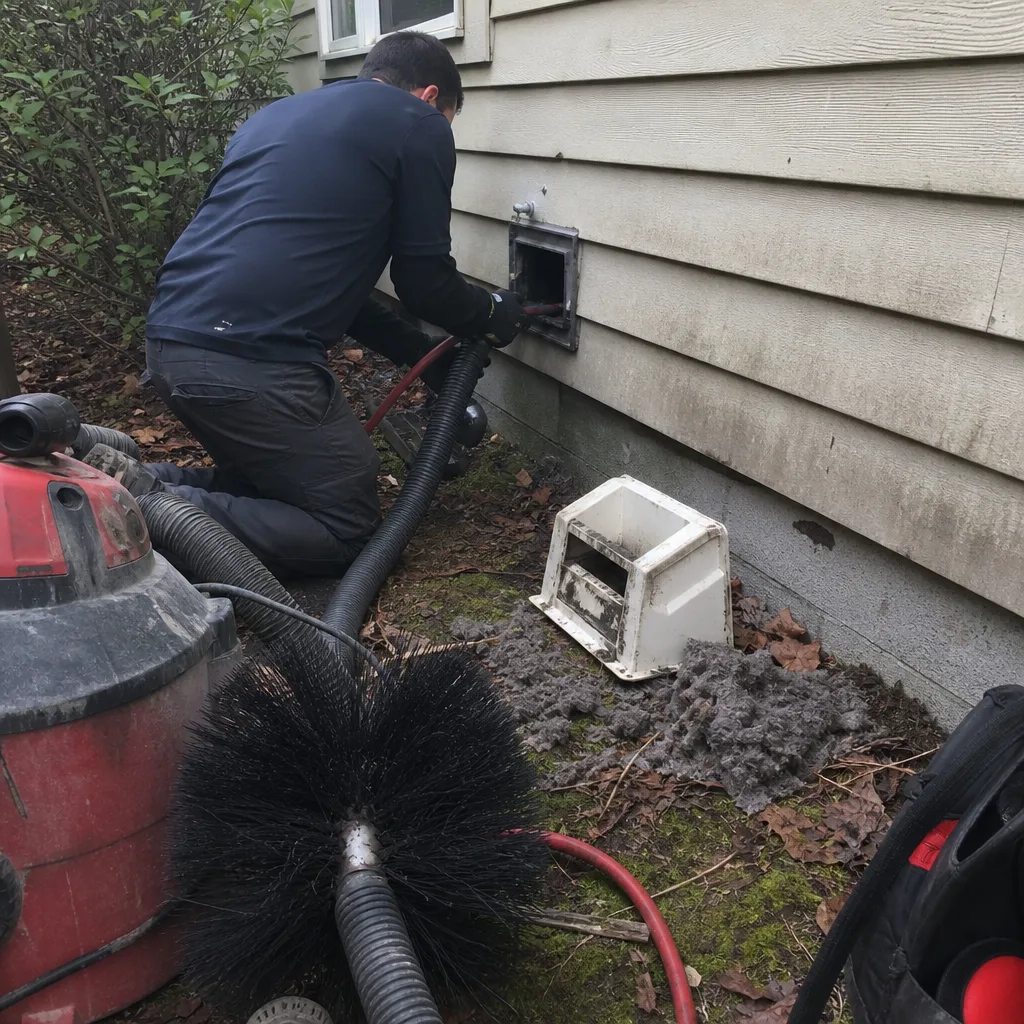 Before
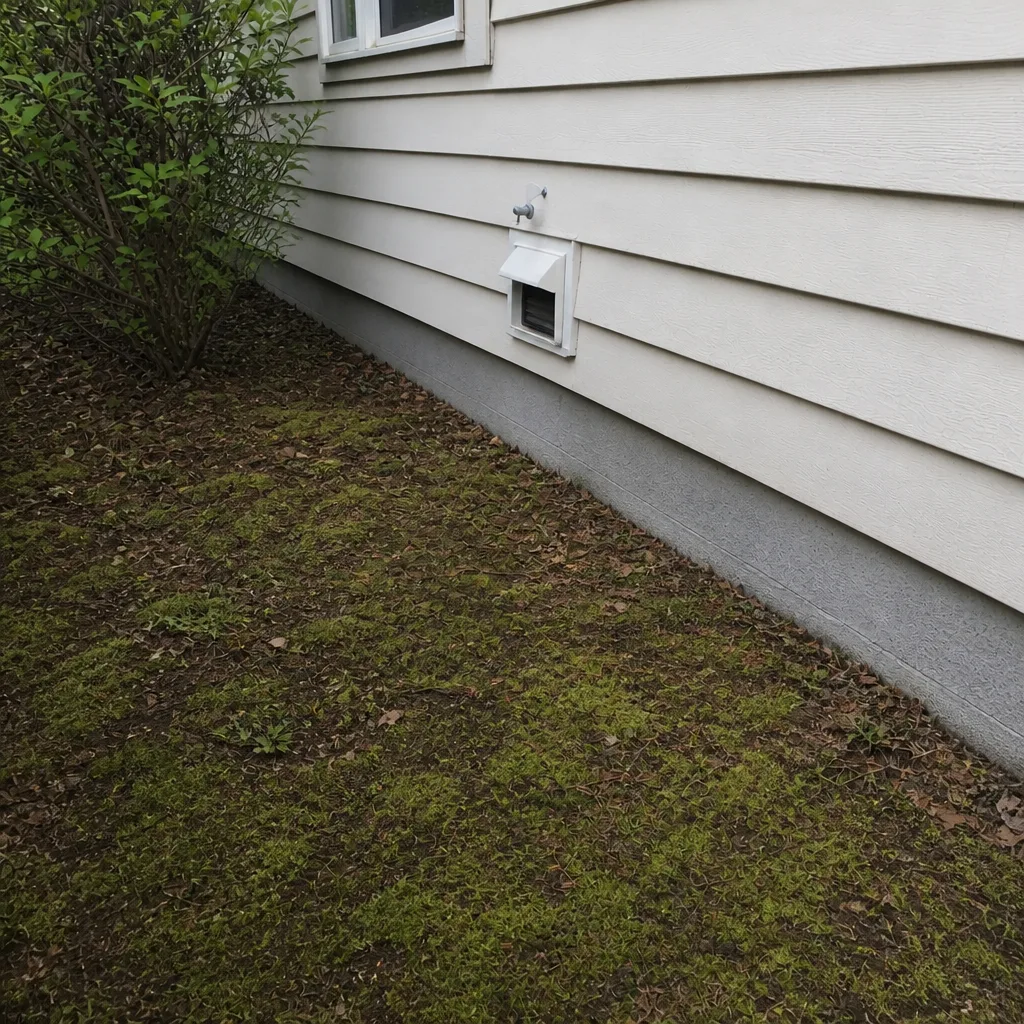 After
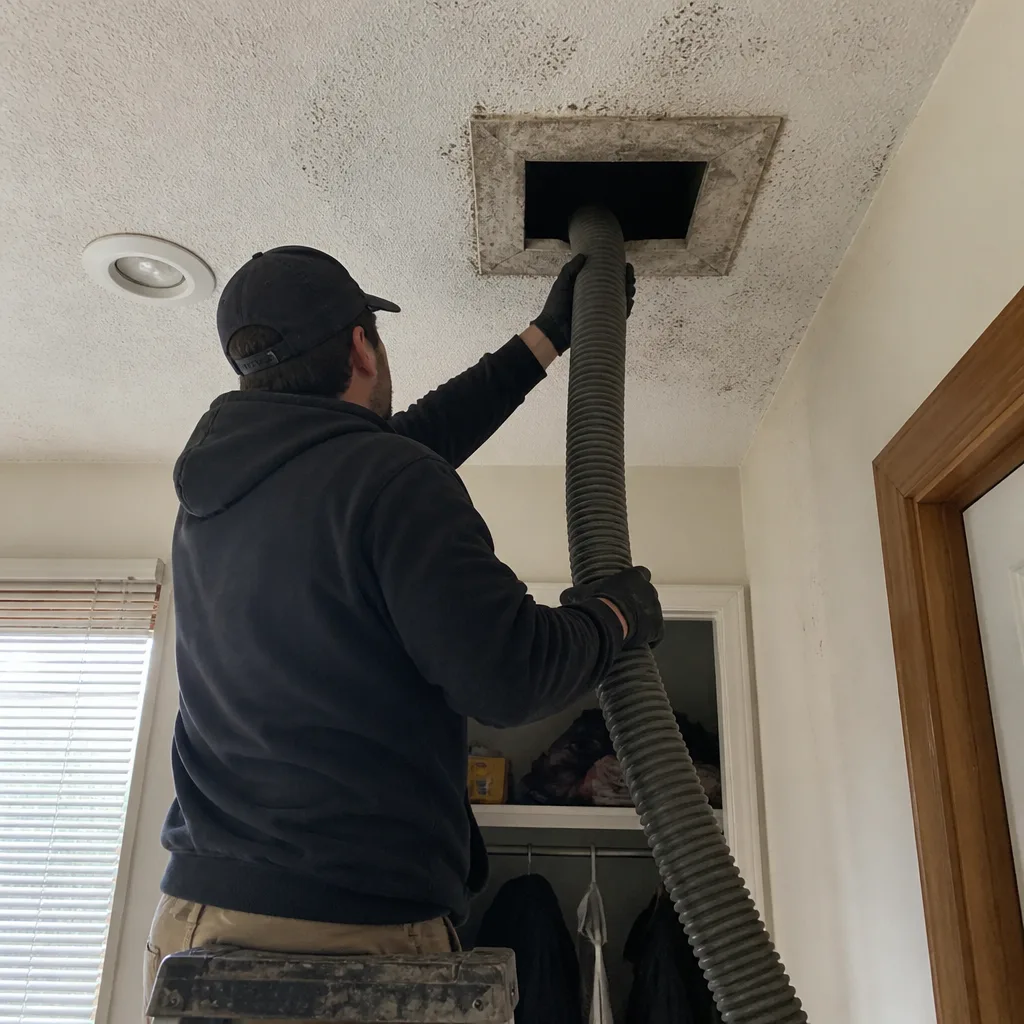 Before
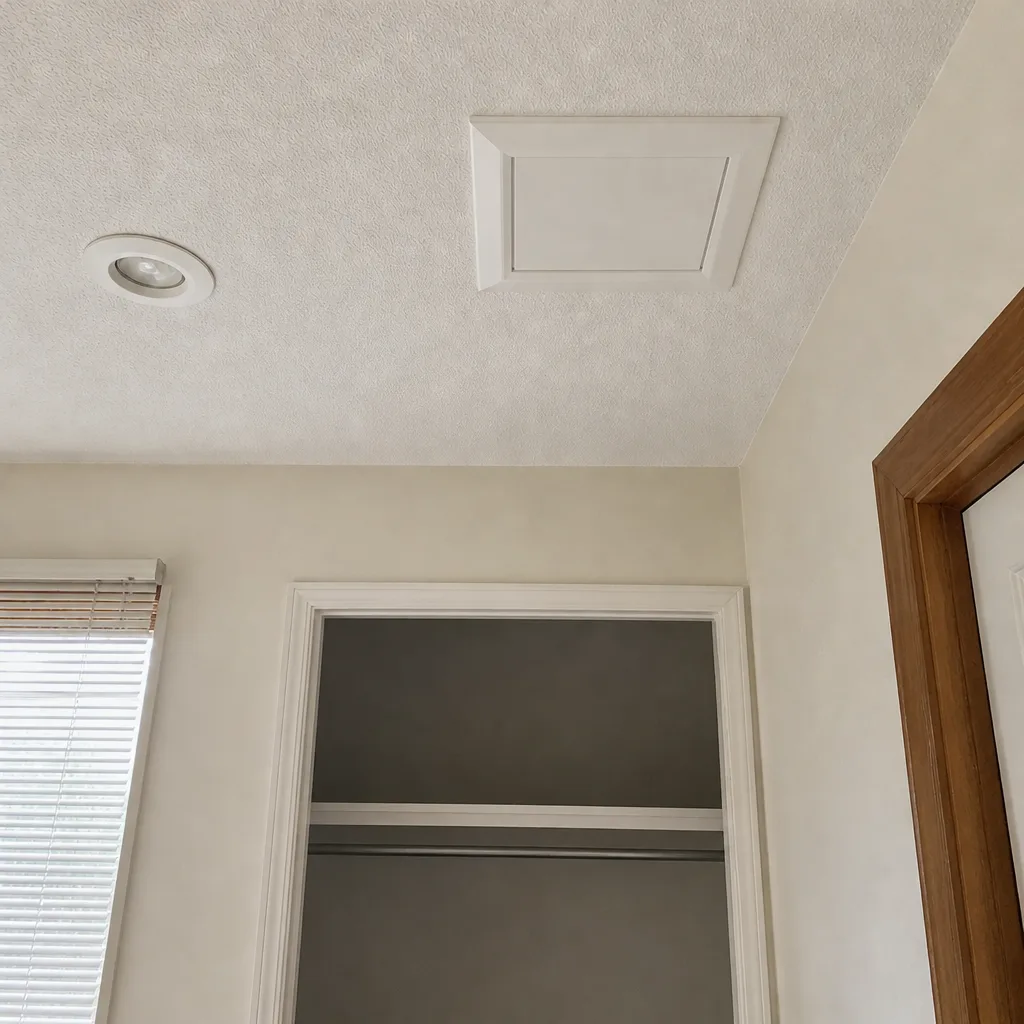 After
 Before
 After