
Last updated November 22, 2026
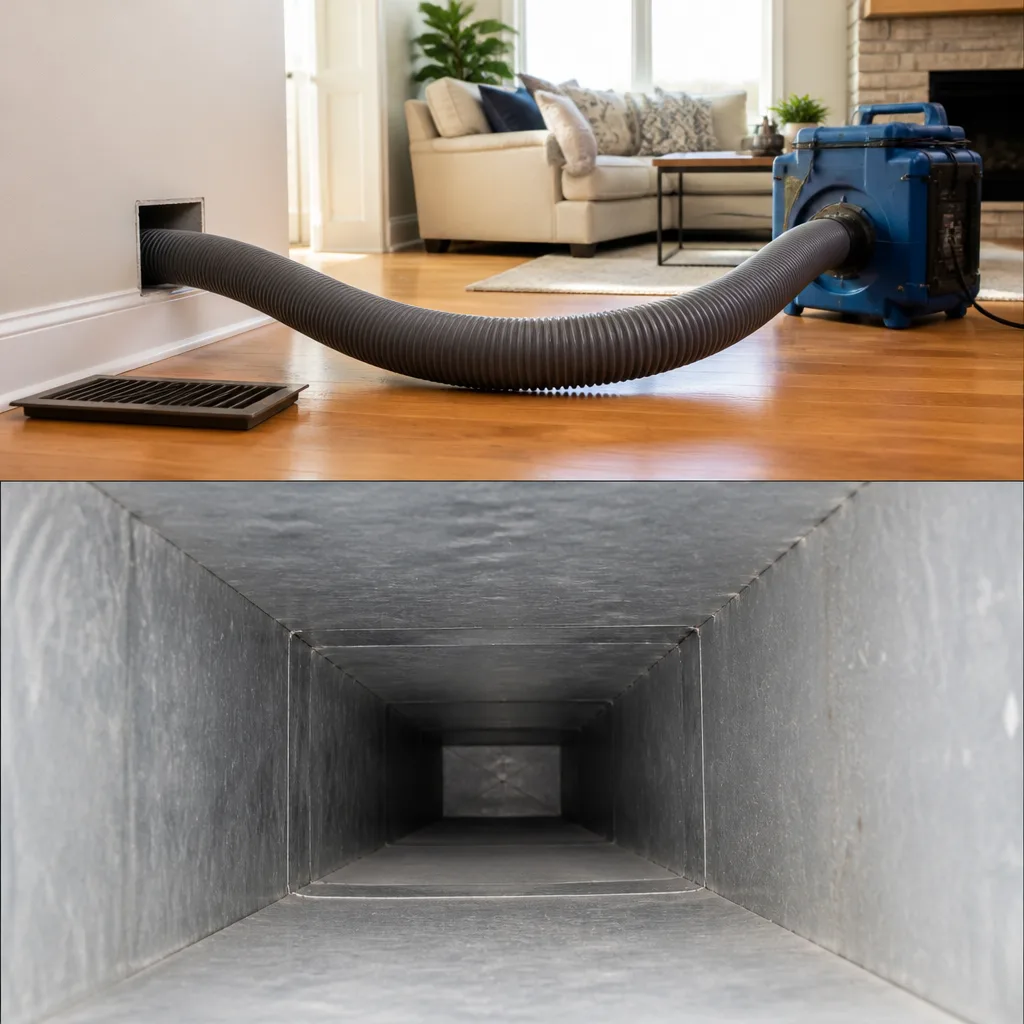 Whole-home duct cleaning
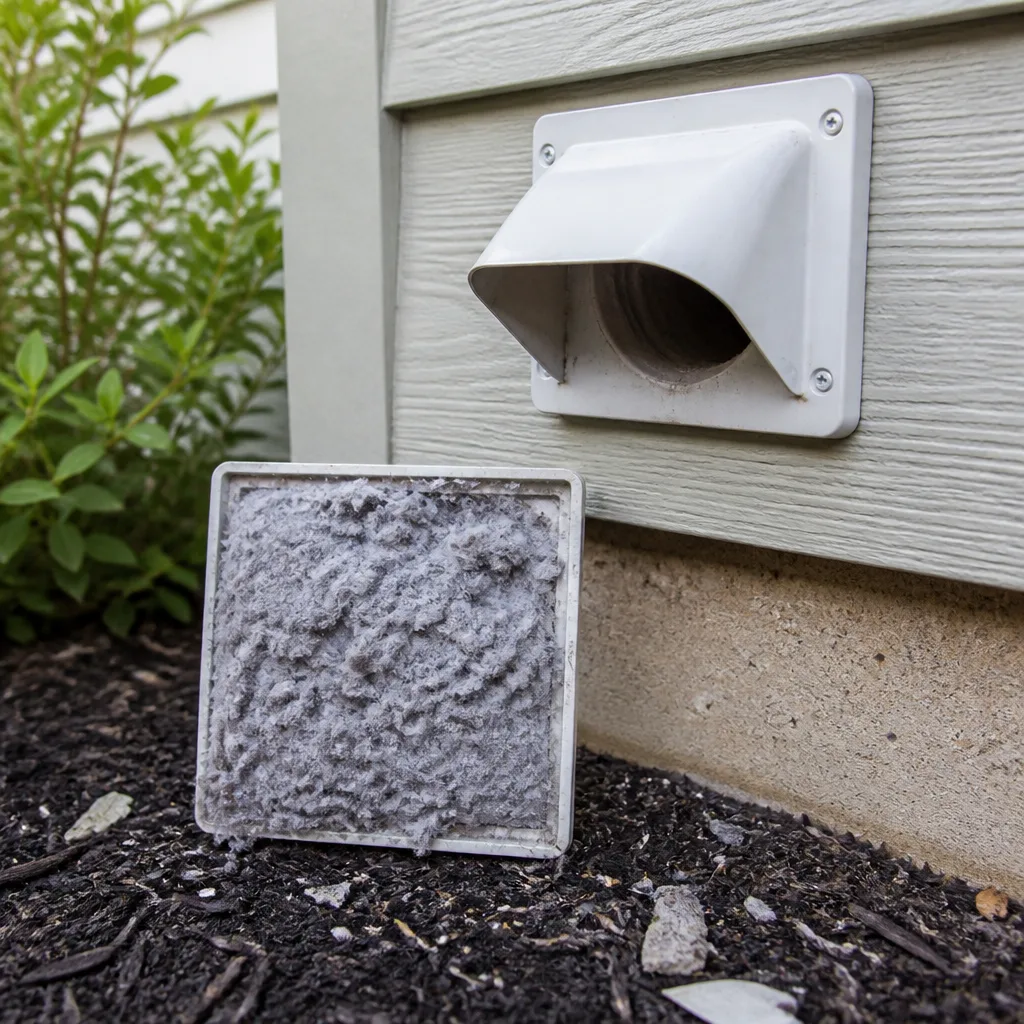 Dryer vent cleaning
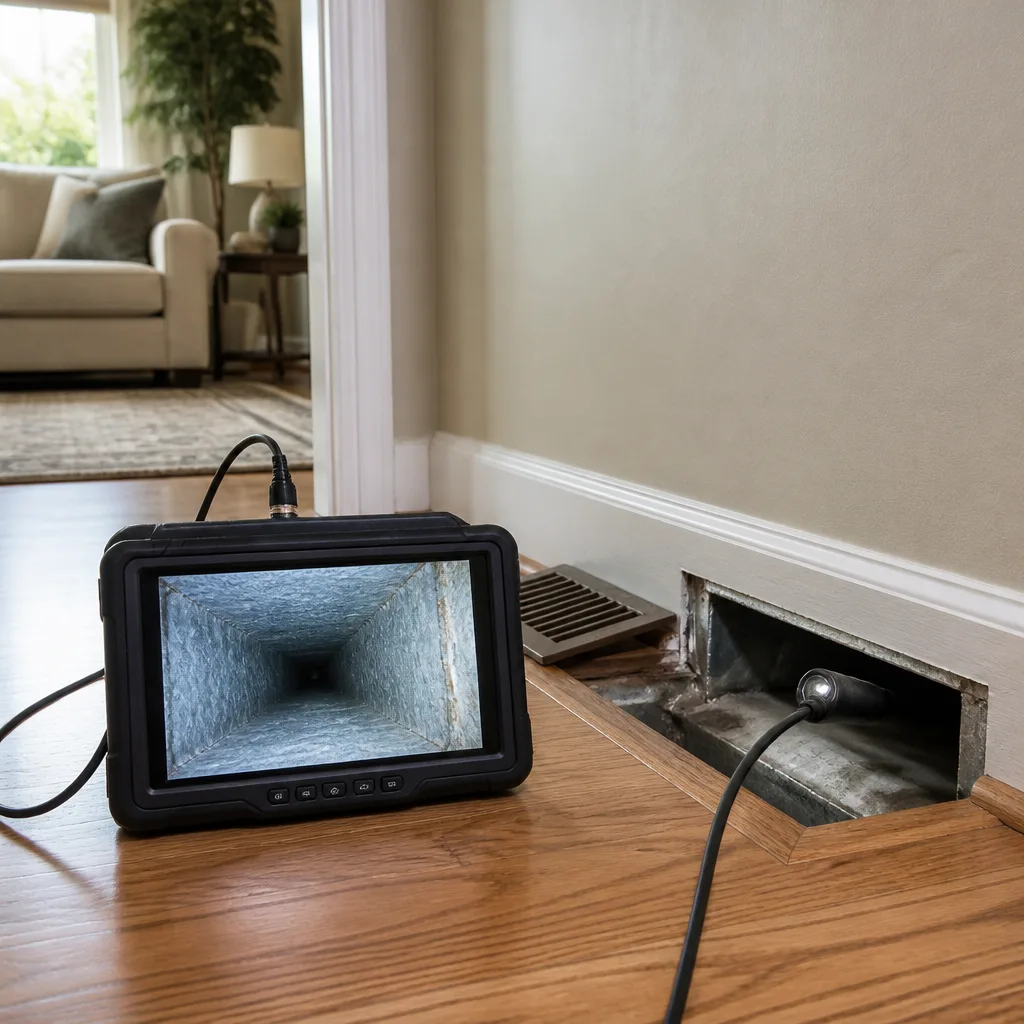 Camera inspection
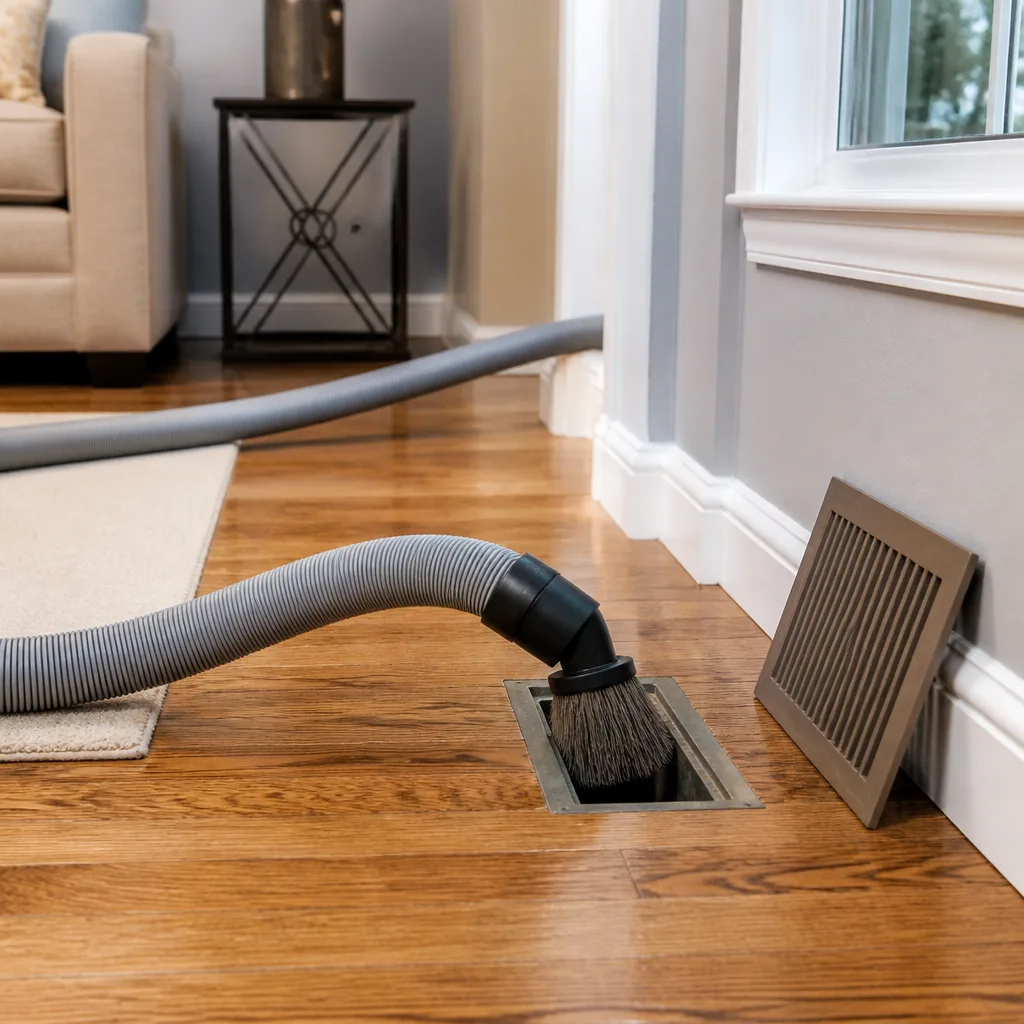 Sanitizing & deodorizing
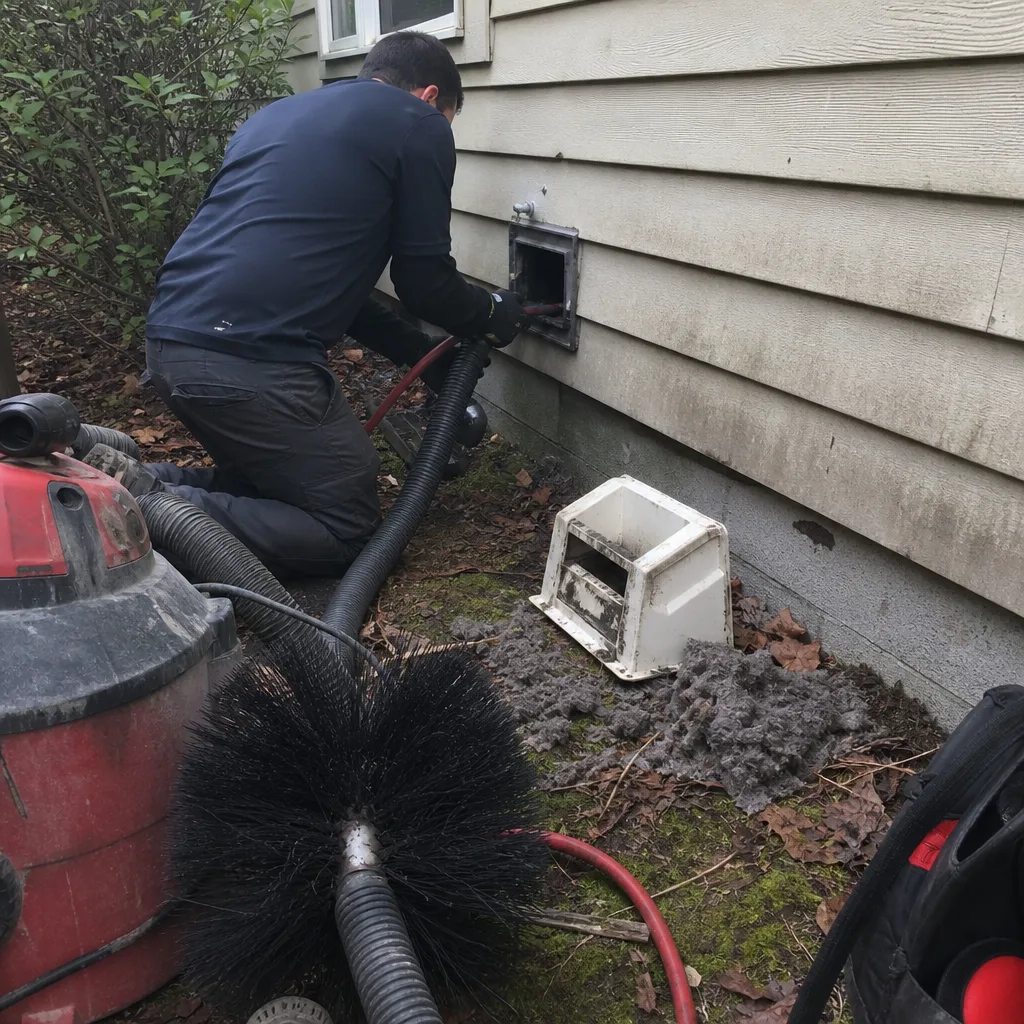
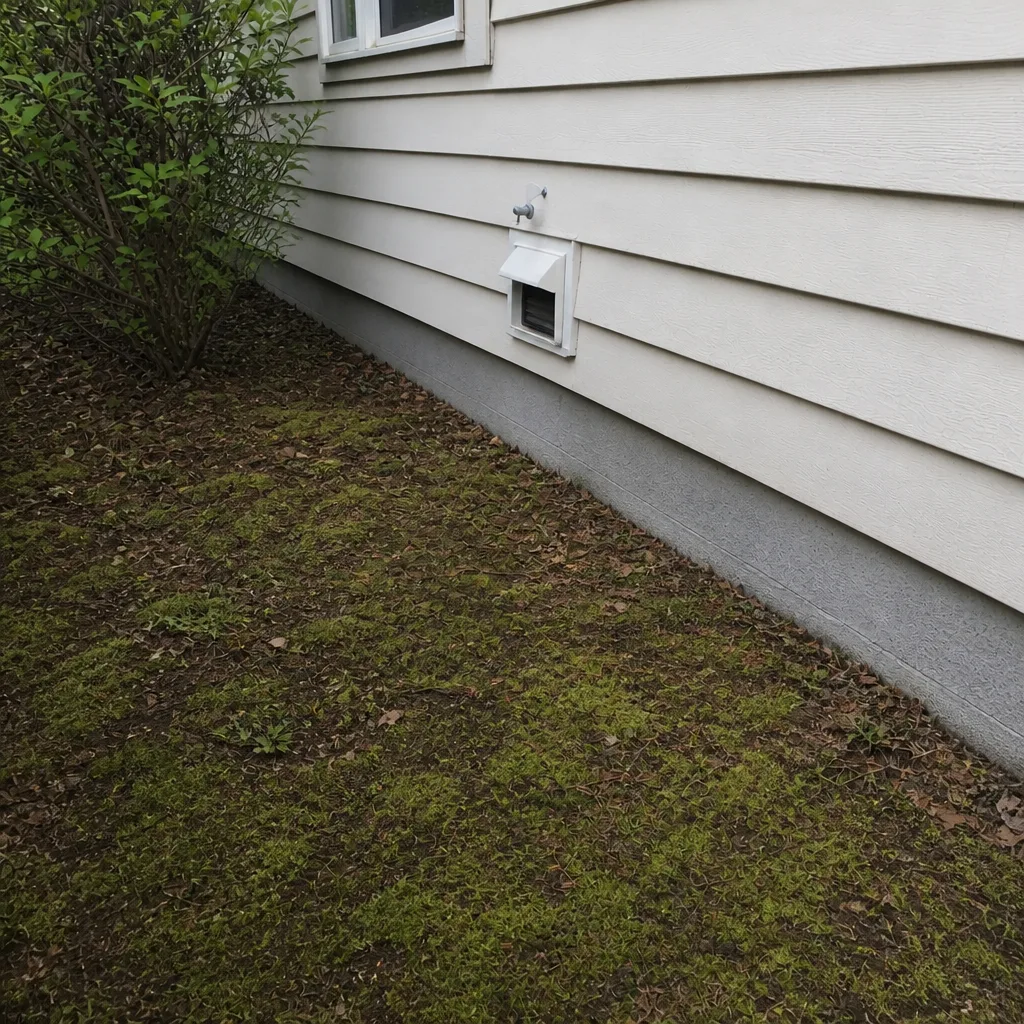
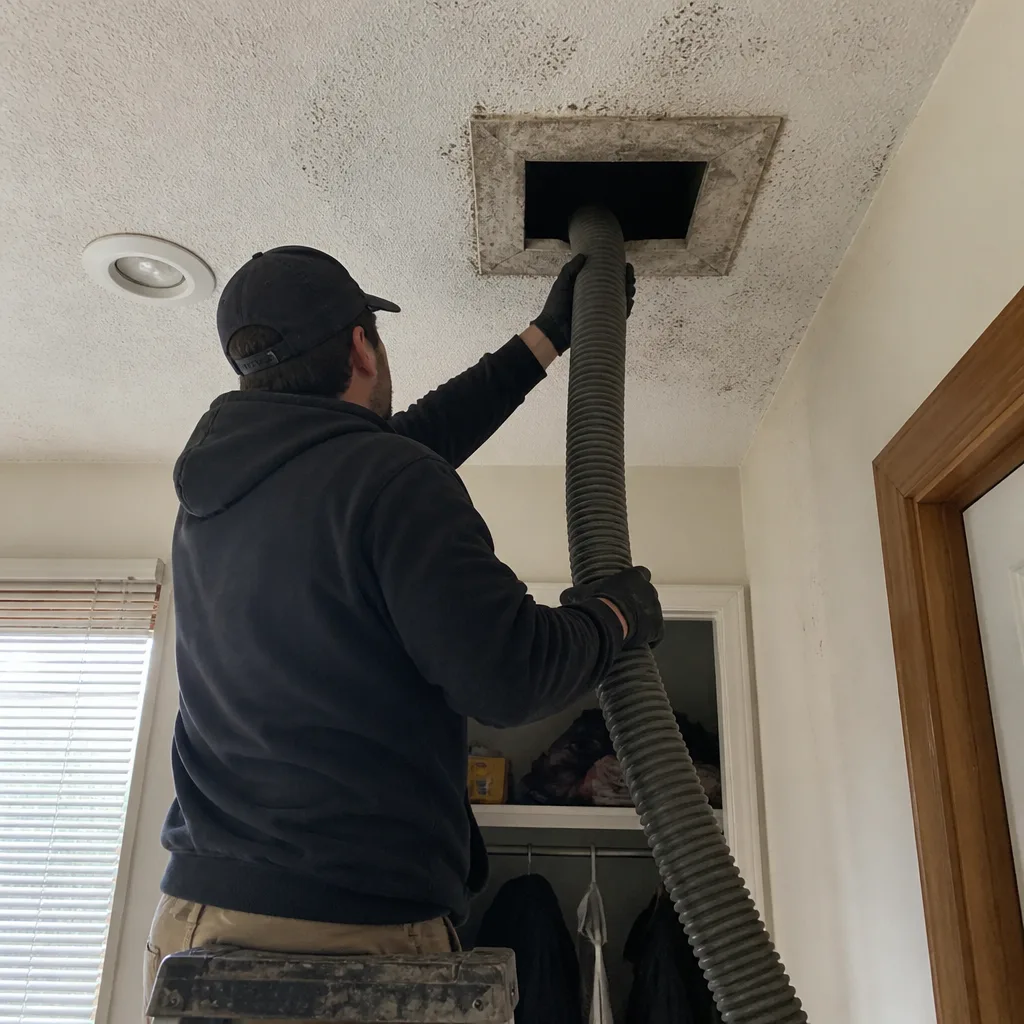
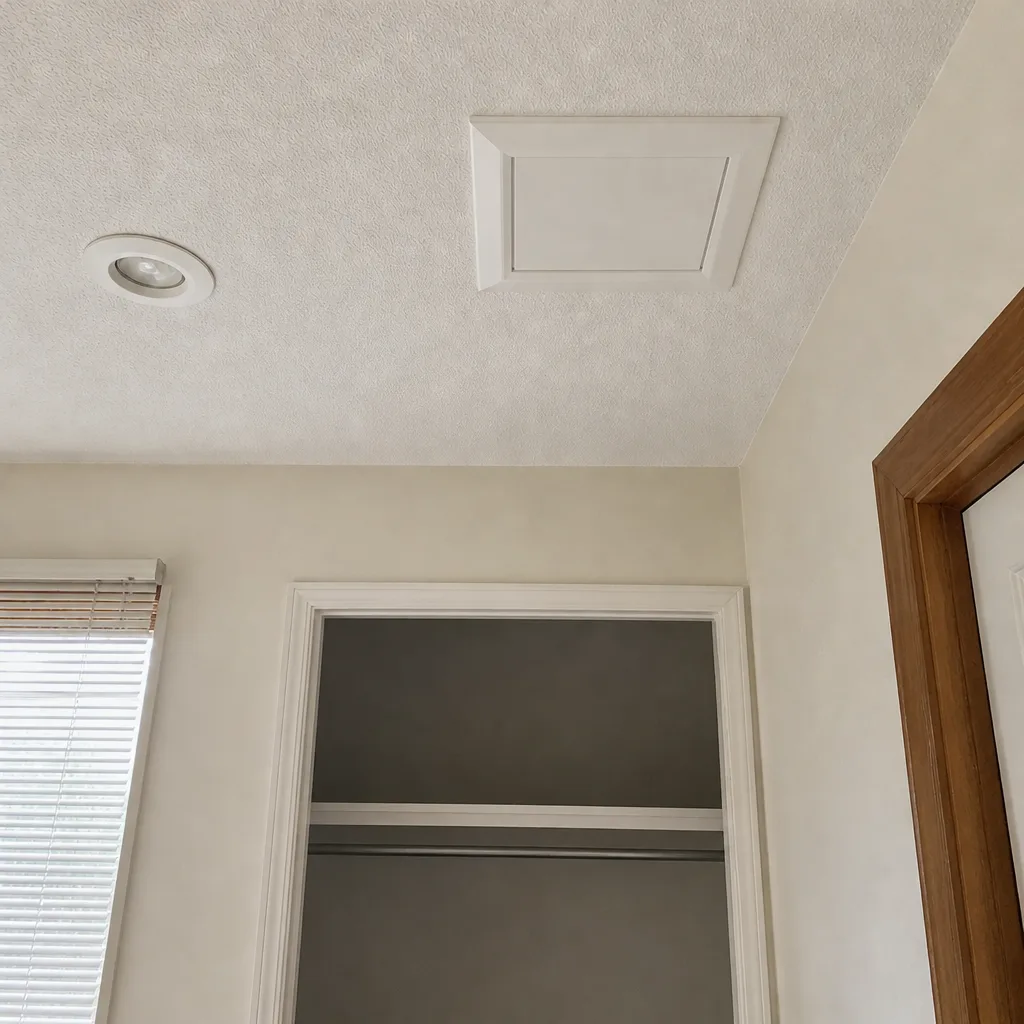
Whole-system duct and dryer vent check with before-and-after photos - you see exactly what came out of your vents
That "$99 whole-house special" is a bait ad - the real number appears once they are in your hallway, or the "clean" is a shop-vac at the register. We photograph the inside of your ducts before and after instead.
DIY vs Professional Air Duct Cleaning: The Capitol Hill Homeowner’s Decision Guide
Most homeowners assume duct cleaning is mostly about scrubbing. It isn’t. It’s about airflow, and the difference between a shop vacuum and a professional duct cleaning system is the difference between a garden hose and a fire engine: both move water, but only one moves enough of it, fast enough, to matter. A consumer vacuum generates roughly 55 inches of water lift at a single point. Professional equipment operates in the thousands of cubic feet per minute with continuous negative pressure across the whole system. That gap is physics, not marketing, and it decides what a do-it-yourself weekend can honestly accomplish. We’ll walk you through what DIY cleaning genuinely does well, where it quietly makes indoor air worse, and how to judge the middle ground, with specific attention to the older housing stock around Capitol Hill.
Quick Answer
Professional air duct cleaning moves far more air than any consumer or rental vacuum can, using continuous negative pressure measured in thousands of CFM to pull debris out of duct interiors rather than puff it into your rooms. DIY cleaning is worth doing for registers, grilles and filter housings, but it cannot clean the inside of the duct runs. For post-renovation dust, pest contamination, mold or deteriorating ductwork in Capitol Hill’s older homes, professional cleaning is the only effective option.
Styles & brands we work with
- Whole-home duct cleaning
- Dryer vent cleaning
- Camera inspection
- Sanitizing & deodorizing
Table of Contents
- The Physics: Why CFM Beats Suction Strength
- What DIY Cleaning Actually Accomplishes
- Why Rental Equipment Falls Short
- The Capitol Hill Risk: Disturbing Settled Debris
- What a Professional Cleaning Actually Involves
- When Professional Cleaning Is Non-Negotiable
- How Much Duct Cleaning Costs in Capitol Hill
- How to Choose a Duct Cleaning Provider
The Physics: Why CFM Beats Suction Strength
Airflow volume, measured in cubic feet per minute, is the governing variable in duct cleaning. Not suction strength at a single point. A vacuum nozzle pressed against a register can pull hard on that one spot, but the dust you’re worried about doesn’t live at the register. It lives along the duct walls, in the joints, on the turning vanes, and in the plenum where the system widens out. Moving that material requires a sustained volume of air sweeping through the entire duct run at once, carrying debris downstream to a collection point. That’s how professional systems work: they pressurize or vacuum the whole system and keep the air moving until the ducts are clear.
Here’s the comparison that matters most:
- Consumer shop vacuum: Roughly 55 inches of water lift, high static pressure at the nozzle, low airflow volume. Effective at picking up debris an inch from the tip. Useless 20 feet down a duct.
- Rental “duct cleaning” equipment: Often a shop vacuum with a longer hose and a brush attachment. The airflow is still measured in hundreds of CFM, not thousands, and the static pressure drops off quickly as soon as the hose length increases.
- Professional duct cleaning systems (Rotobrush, Nikro): Purpose-built machines that combine mechanical agitation with continuous high-volume negative pressure, typically operating in the 8,000-12,000 CFM range when paired with the right collection equipment.
Static pressure matters too, but in the opposite direction from what most people expect. High static pressure at a small nozzle feels impressive, but what actually dislodges settled dust from a duct wall is a sustained sweep of air, not a point-source pull. Think of it as the difference between vacuuming a carpet with a narrow crevice tool and vacuuming it with a wide power head: the power head wins because it moves more air across more surface. Professional duct cleaning systems are designed around that principle. Consumer equipment isn’t, and no attachment changes that.
This is also why generalist HVAC companies sometimes disappoint on duct cleaning. Their trucks carry the tools for refrigerant, motors and controls, not for contamination control. Duct cleaning is a separate discipline with its own equipment, and a company that treats it as an add-on often doesn’t bring the airflow to do the job.
What DIY Cleaning Actually Accomplishes
DIY cleaning is worth doing, and we’d rather you do it than skip everything. The honest limitation is scope: you can reach the surfaces that face you, and you can’t reach the interior of the system. Here’s what a homeowner with a shop vacuum, a brush kit and a few hours can legitimately accomplish:
- Register and grille cleaning. Remove each supply and return grille, wash it in warm soapy water, dry it fully, and reinstall. This removes visible dust, pet hair and cooking film from the surfaces you actually see and breathe near.
- Filter housing wipedown. With the filter out, wipe the inside of the filter slot and the return-air box. A buildup of dust here re-enters the airstream every time the system runs.
- Surface dusting around returns. The wall or ceiling immediately around a return grille collects dust from the airflow edge. Wipe it down after you reinstall.
- Filter replacement on schedule. The single highest-impact DIY air quality step you can take is changing the filter on the manufacturer’s schedule for your filter’s rating, not on a guess.
- Checking for visible problems. Shine a light into the return drop and look for disconnected joints, crushed flex duct, water staining or pest evidence. If you see any of those, stop and call a professional.
What DIY cleaning cannot do is clean the inside of the supply trunk, the branch runs, the plenum above the air handler, or the coil surface. It also can’t contain the dust it disturbs, which is the next problem. In our experience, homeowners who clean their own registers and change their filters regularly do get real benefit from it; they just shouldn’t expect that to substitute for a full system cleaning when the system actually needs one.
For a deeper walkthrough of the professional process, see our page on air duct cleaning.
Why Rental Equipment Falls Short
Rental centers market “duct cleaning machines” that are, in practice, shop vacuums with accessories. They look the part. They don’t perform the part. The specific gaps are worth understanding because they explain why a rental weekend so often disappoints:
- Airflow volume. Rental units typically move a fraction of the CFM that professional systems do. The air that reaches the far end of a 20-foot run has lost most of its velocity.
- Hose length and pressure drop. Static pressure falls as hose length and diameter increase. A rental with a 20-foot hose loses more than half its usable suction at the far end.
- No mechanical agitation. Dust that has bonded to duct walls doesn’t release from airflow alone. Professional systems use rotating brushes, air whips or skipper balls to break the bond, then a high-volume vacuum to carry the debris away.
- No containment. Rental equipment doesn’t come with HEPA filtration or negative-pressure containment. Whatever you loosen goes into the air in your home.
- No inspection capability. Professionals use cameras and access panels to see what’s actually inside the duct. A rental gives you no way to know whether the job is done.
The rental-center pitch assumes the duct is a straight pipe with loose dust in it. Real ducts are a network of trunks, branches, transitions, elbows and boots, and the debris has had years to settle into the places a shop-vac attachment can’t reach. That’s why we say the tools your HVAC company doesn’t bring aren’t a luxury. They’re the whole job.
The Capitol Hill Risk: Disturbing Settled Debris
In Capitol Hill’s older homes, DIY cleaning carries a specific risk that newer construction doesn’t: disturbing settled debris without containment. A lot of pre-war and mid-century housing stock in this neighborhood has been retrofitted over the decades with flex duct and duct board, sometimes run through tight chases and crawlspaces where it has been crushed, kinked or patched. Decades of settled dust sits on the interior surfaces. When you introduce a shop-vac nozzle and start agitating, you don’t remove that material. You lift it into the airstream, and it comes out the nearest register. In the short term, the homeowner trades visible dust for airborne dust.
There’s a second problem with old duct systems: damaged duct board and deteriorating flex liner. Both are common in Capitol Hill homes that have been through multiple renovations. Duct board is a rigid fiberglass product with a foil or coated facing, and once the facing tears, the fiberglass core is exposed to the airstream. Flex duct has a plastic liner and a wire helix, and both fail with age. A DIY brush kit run through a failing duct can tear that liner further, dislodge pieces of insulation and worsen the very air quality the homeowner was trying to improve.
Proper containment is what professional cleaning adds here. The equipment we use from Abatement Technologies is purpose-built for negative-pressure containment, the same standard used in restoration and remediation work. It keeps the loosened debris out of the living space while the system is being cleaned, and it lets us inspect for damage before we agitate anything. That’s why we treat duct repair and sealing as a core service rather than an upsell: on a Capitol Hill duct system, the fix often starts before the cleaning does. If you’ve noticed musty odors, visible dust at the registers or high energy bills, the diagnosis matters as much as the cleaning.
What a Professional Cleaning Actually Involves
A proper duct cleaning is a process, not a pass. Here’s what a full-system professional cleaning typically looks like:
- Inspection and access. A technician inspects the system, including the air handler, plenum, trunks and branches, and opens access panels where needed. If damage is found in the flex duct or duct board, it’s flagged before cleaning starts.
- Containment setup. Negative-pressure containment is established with HEPA filtration so that loosened debris is captured rather than released into the home.
- Mechanical agitation. Rotating brushes, air whips or skipper balls run through the duct runs to break bonded dust free from the walls.
- High-volume extraction. Professional equipment pulls the loosened debris out of the system with continuous negative pressure while the agitation runs.
- Coil and component cleaning. The evaporator coil, drain pan and blower are cleaned as part of the system, not treated as separate work.
- Sanitizing where indicated. When biological contamination is present or suspected, the system is treated with an appropriate sanitizer under controlled conditions.
- Repair and sealing. Any disconnected joints, crushed sections or failing liner are repaired and sealed so the system doesn’t re-contaminate itself and stop losing conditioned air into the crawlspace.
- Final verification. The technician checks the system for airflow and confirms the collection equipment captured what was loosened, and shares before-and-after documentation with the homeowner.
This is why “one call covers the full system” matters. Cleaning, sanitizing, repair and sealing are all part of the same job on an older duct system. Our technicians have up to 13 years of experience and use Rotobrush and Nikro systems for duct work, Guardsman and Honeywell components where they fit the application, and Aprilaire air quality products where the homeowner wants to improve filtration after the cleaning is done. If you’d like to see how a full-system cleaning connects with the rest of the service, look at HVAC cleaning.
When Professional Cleaning Is Non-Negotiable
Some situations override any cost preference. If any of these apply, professional cleaning isn’t optional, and DIY attempts can make things worse:
- Post-renovation dust. Drywall dust, sawdust and silica are fine enough to settle deep into duct runs and to stay airborne once disturbed. A renovation puts far more of this in the system than normal occupancy does, and it needs proper extraction, not surface wiping.
- Pest infestation. Rodent or bird activity in a duct system leaves nesting material, droppings and potentially hantavirus or other pathogens. This is a contamination-control job, not a cleaning job, and it requires protective equipment and proper disposal.
- Biological contamination. Visible mold growth inside the ductwork, or persistent musty odors that follow the system running, usually means a moisture problem is feeding growth. Cleaning without fixing the moisture source re-contaminates the system; this needs a diagnostic, not a brush.
- Water damage or flooding that reached the ducts. Any duct that has been wet needs to be assessed for contamination and possibly replaced, not just cleaned.
- Extensive visible debris at registers after a DIY attempt. If you loosen material and it keeps appearing at the registers, stop. The system needs extraction, not more agitation.
- Suspected duct damage in Capitol Hill’s older homes. Crushed flex, torn duct board or disconnected joints need repair and sealing alongside cleaning, which is work that has to be done by someone with the right tools and the right containment.
Outside of those cases, the honest answer is that DIY register cleaning and filter maintenance are worth doing, and a full professional cleaning is worth scheduling periodically depending on your system, your household and what’s happened to the house recently.
While you’re thinking about your ductwork, don’t forget the other vent in the house. Dryer vents are one of the leading causes of residential fires in the U.S., and dryer vent cleaning is a genuine safety service, not a cosmetic one.
How Much Duct Cleaning Costs in Capitol Hill
Air duct cleaning in Capitol Hill typically runs from roughly $300 to $500 for a standard single-system home, with larger or more complex systems and homes with heavy contamination running higher. The number that matters isn’t the per-vent teaser rate you’ll see in ads. It’s the total for the system, and the only way to get a meaningful total is a written estimate based on the actual system in your house.
- Standard single-system home: typically in the $300-$500 range, including trunk, branches, registers and blower
- Larger or multi-zone systems: higher, quoted per system after inspection
- Heavy contamination or post-renovation cleanup: higher, quoted after inspection and before work begins
- Duct repair and sealing: quoted separately, per job, after the inspection identifies what needs fixing
We work from one flat price per system agreed before any work starts, not per-vent pricing, and we photograph the system before and after so you can see what was actually removed. Those are the two things that answer the bait-and-switch reputation this industry has earned: a low advertised price that becomes a far larger invoice once the technician is on site. If you want a real number for your Capitol Hill home, call (855) 970-9419. Estimates are free, and the written estimate sets the final price.
How to Choose a Duct Cleaning Provider
The provider matters more than the price tag, because the difference between a real cleaning and a pass-through is invisible from the driveway. Here’s what to look for:
- Ask what equipment they use. If the answer is a shop vacuum or a name you’ve never heard of, push back. Professional duct cleaning requires professional-grade equipment from brands like Rotobrush or Nikro, not consumer tools.
- Ask about containment. Any reputable provider uses HEPA filtration and negative pressure to keep dust out of your living space.
- Ask for a per-system price in writing. Not per-vent, not a coupon that expires, and not a number that gets revised after the technician arrives.
- Ask whether they inspect before cleaning. A provider who is willing to quote before looking at the system isn’t doing the diagnostic part of the job.
- Ask for before-and-after documentation. Photos of your own ductwork, not stock images.
- Ask whether they offer repair and sealing. If the answer is no, you’ll be coordinating a second contractor when the inspection finds damage.
- Confirm the local pro is licensed and insured as their state requires.
A provider that checks all seven is a specialist. A provider that checks two is a generalist with a brochure. We’ve seen the difference in Capitol Hill homes plenty of times: the ductwork was never really cleaned, the homeowner paid anyway, and the same dust came back within a season. Cleaning without repair and sealing means the system re-contaminates itself.
If you want to understand what indoor air quality support looks like beyond cleaning, the place to start is our Air Duct Cleaning Capitol Hill home page. It’s a full-service approach: cleaning, sanitizing, repair and sealing in a single provider, with Aprilaire and Honeywell products available where the homeowner wants to upgrade filtration after the cleaning.
Common Mistakes to Avoid
- Assuming a shop vacuum is a duct cleaning system. It’s not. A shop vacuum moves a fraction of the airflow a professional system does, and it has no way to sweep the interior of the duct runs. If the debris isn’t within reach of the nozzle, it isn’t going anywhere.
- Agitating ducts without containment. Loosening dust in an older duct system without negative-pressure containment releases it into the living space. This is especially risky in Capitol Hill homes with decades of settled debris in the system.
- Running a brush through aging flex duct or duct board. Both fail with age. A brush can tear a plastic liner or expose the fiberglass core of duct board, turning a cleaning attempt into a repair job.
- Buying on the coupon price. A low advertised rate usually gets revised once the technician is on site. Ask for the per-system total in writing, before work starts.
- Skipping the inspection step. Cleaning without inspecting can miss disconnected joints, crushed duct and moisture problems. Those are the issues that re-contaminate the system after the cleaning is done.
- Treating cleaning as the whole job. If the ductwork has cracks, gaps or failing connections, cleaning without sealing leaves the system leaking conditioned air and pulling dust back in. Clean ducts are only half the job.
- Ignoring the dryer vent. It’s a separate vent but the same household system. A clogged dryer vent is one of the leading causes of residential fires, and it’s often forgotten until the dryer starts running hot.
See the difference
 Before
 After
 Before
 After
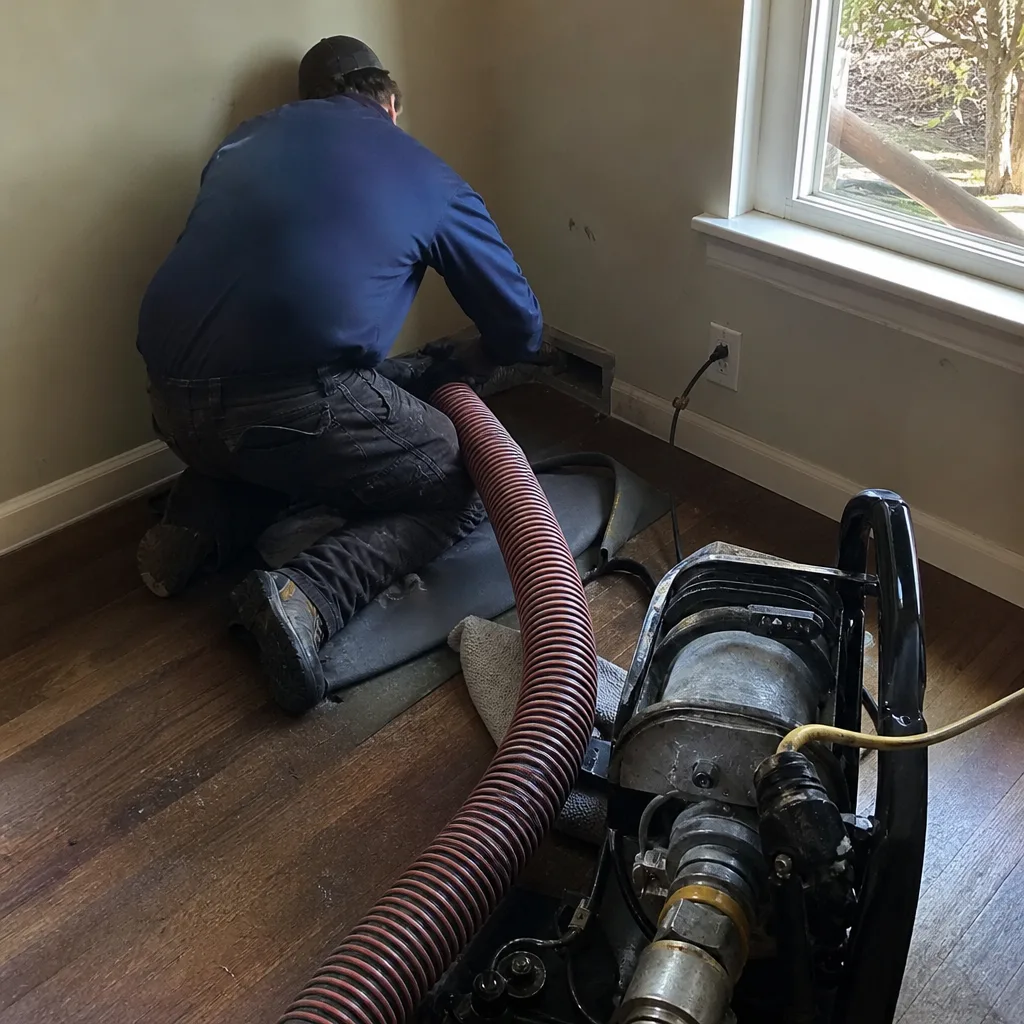 Before
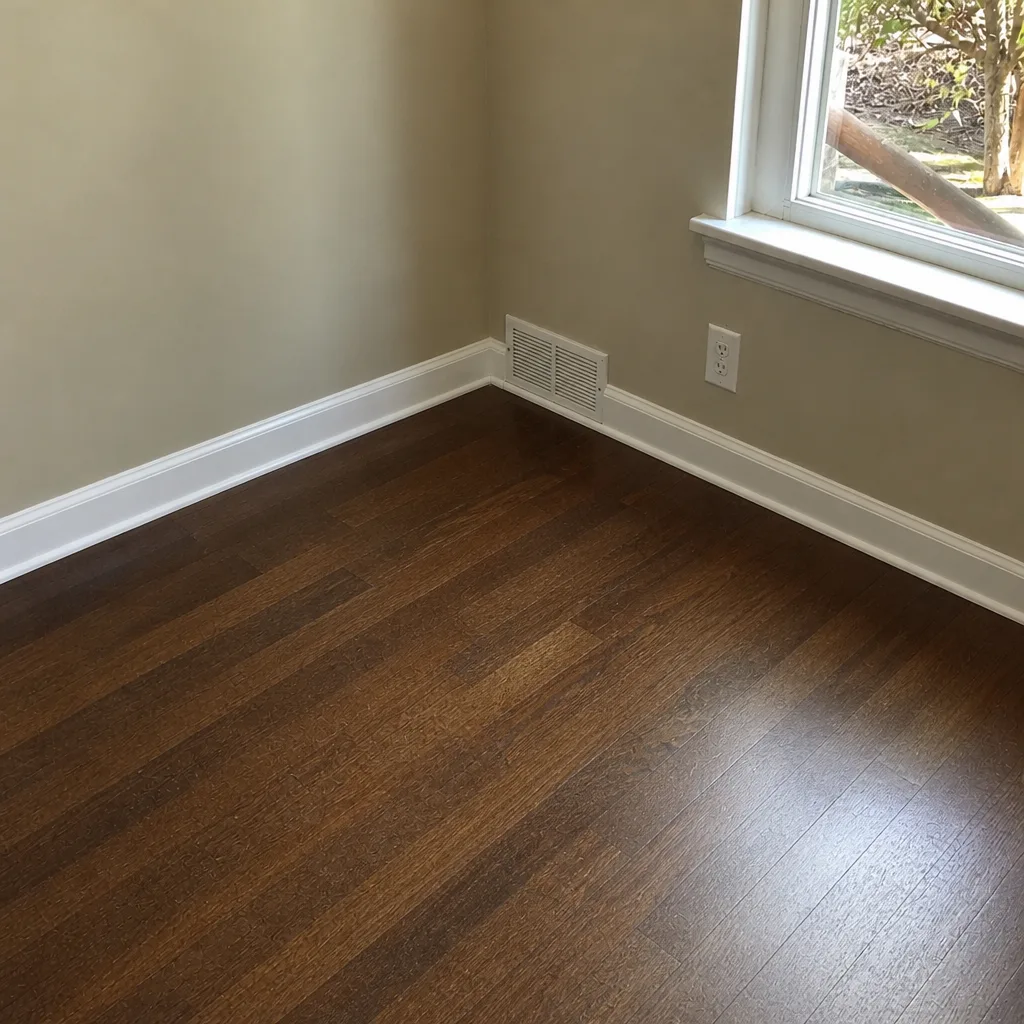 After
When to Call a Professional
Call a professional duct cleaning specialist when the job exceeds what a shop vacuum and a brush can reach: post-renovation cleanup, pest activity in the ducts, visible mold or musty odors, water damage, or visible debris that keeps appearing at the registers after you’ve cleaned them. Also call if your Capitol Hill home has older flex duct or duct board that might be damaged, or if the system has never been cleaned and you don’t know what’s inside it. A proper inspection tells you whether you need a cleaning, a repair, or both. Air Duct Cleaning Capitol Hill offers free estimates in Capitol Hill. Call (855) 970-9419. We answer 24/7. Fast dispatch from 7am to 7pm, Sunday through Friday.
Frequently Asked Questions
Not the way a professional can. A shop vacuum can clean registers, grilles and filter housings, but it can’t generate the continuous high-volume negative pressure needed to pull debris out of duct interiors. Consumer vacuums typically produce around 55 inches of water lift at a single point, while professional systems move thousands of CFM across the whole system. For the surfaces you can reach, DIY is worth doing. For the inside of the ductwork, it isn’t a substitute. Call (855) 970-9419 for a free estimate on a full-system cleaning.
Air duct cleaning in Capitol Hill typically runs from about $300 to $500 for a standard single-system home, with larger or more heavily contaminated systems costing more. The final number depends on the size and condition of your system, and it’s set by a written estimate before any work starts. We don’t price per vent, and the coupon number you see in an ad is rarely the total you’ll pay at the door. Call (855) 970-9419 for an exact quote. Estimates are free.
For most homes, every three to five years is a reasonable baseline, and some homes go longer. The answers that matter are specific: after a renovation, after pest activity, after water damage, or when you notice visible dust at the registers, musty odors or high energy bills, the system needs a look regardless of the calendar. Homes with pets, smokers or allergy sufferers may want to schedule more often. Call (855) 970-9419 to talk through your situation.
Usually because the cheap quote isn’t for the same job. A $99 coupon price is often a per-vent teaser that becomes a much larger invoice once the technician is on site, or it covers a surface pass-through with no containment and no extraction. A real per-system price reflects the equipment, the containment, the time and the inspection. Ask any provider for a written per-system total and ask what equipment they’ll use before you book. Call (855) 970-9419 for an honest number.
Ask for before-and-after photos of your own ductwork, not stock images, and ask what the collection equipment captured during the cleaning. A provider who can’t show you what came out of your system didn’t clean it; they visited. We photograph the system before and after and share the images with the homeowner so the job is verifiable. Call (855) 970-9419 to schedule an estimate.
Yes, and often more so than in newer construction. Capitol Hill’s older homes carry decades of settled dust, and many have flex duct or duct board that has been patched or compressed over the years. That combination makes proper containment and inspection more important than the cleaning itself. An inspection will tell you whether cleaning alone is enough or whether repair and sealing need to come first. Call (855) 970-9419 to schedule the inspection.
The Bottom Line
The DIY versus professional question isn’t really about effort or budget. It’s about physics. Consumer-grade equipment can’t generate the airflow volume to clean a duct interior, so a DIY weekend is a surface-level job, not a system cleaning. That’s worth knowing: doing the registers, the filter housing and the filter schedule is genuinely useful, and we’d rather you do it than not. But it doesn’t replace the extraction, containment, inspection and repair work a professional duct cleaning involves, and in older Capitol Hill homes it can make air quality temporarily worse. Call a specialist when the system needs more than surface work.
If you’re ready for a real answer on your duct system, call Air Duct Cleaning Capitol Hill at (855) 970-9419 for a free estimate. We answer 24/7. Fast dispatch from 7am to 7pm, Sunday through Friday. One flat price per system, set by a written estimate before any work starts, with before-and-after photos so you can see what was actually removed.
Written by the team at Air Duct Cleaning Capitol Hill.