
Air Duct Cleaning: Repair or Replace? How Capitol Hill Homeowners Decide
If a contractor quotes you a full duct replacement before anyone has cleaned or inspected the system, that recommendation is missing its first step. Cleaning tells you whether the duct material itself is failing; replacement is only the right call once the inspection shows it is. In our experience across Capitol Hill, most systems that get replaced could have been cleaned, and a smaller number get cleaned when they should have been replaced. The order matters. If you’d rather not climb into a crawlspace to find out yourself, call (855) 970-9419.
Why cleaning should come before any replacement decision
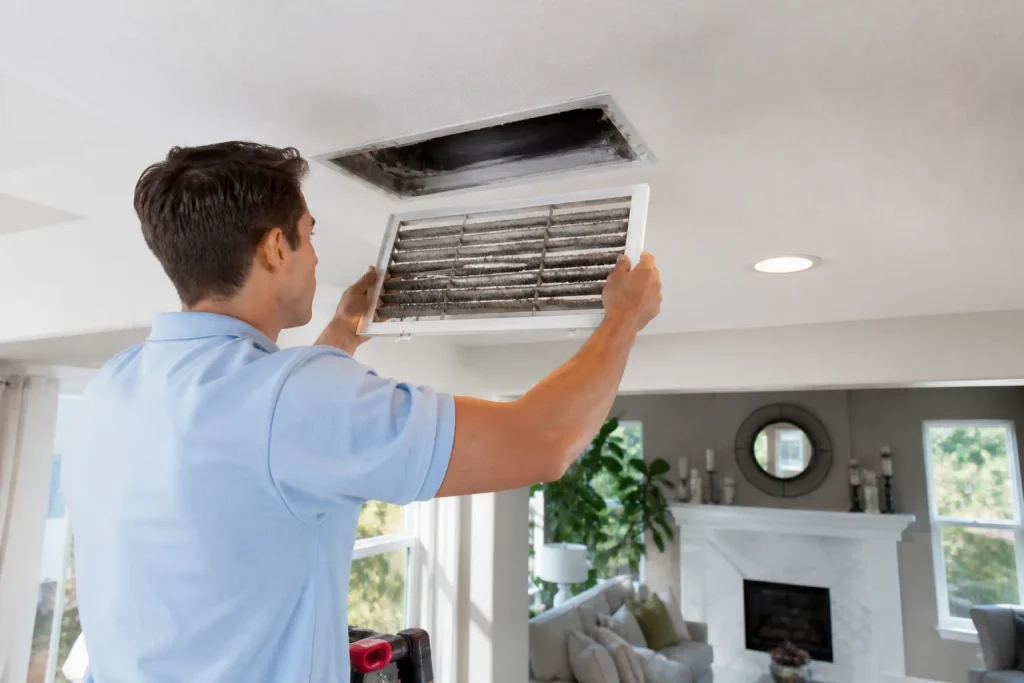
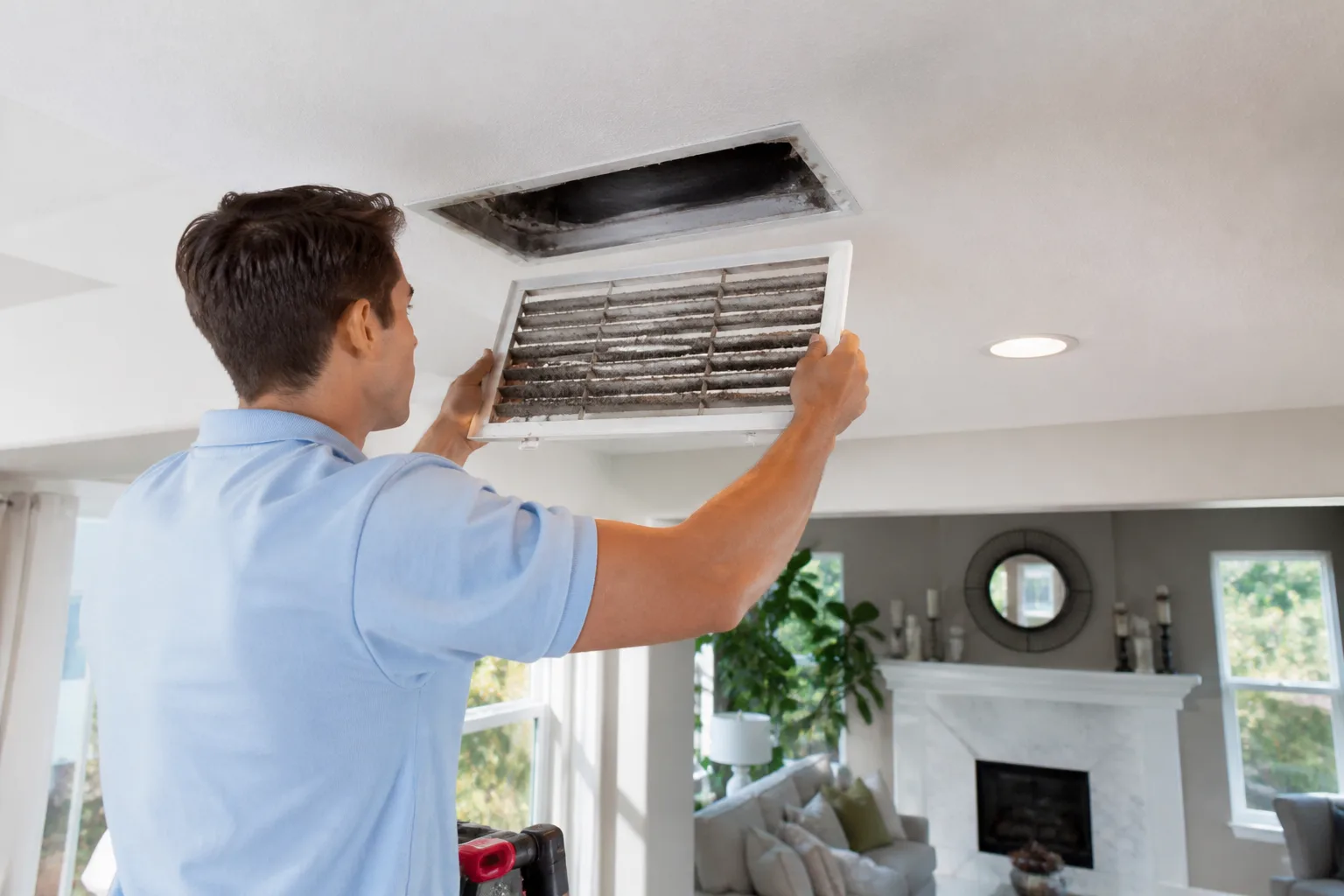
Duct material can look fine from the register and be failing two feet back. Cleaning is the diagnostic. A professional cleaning with equipment built for the job, like the Rotobrush and Nikro systems we use, strips the interior down to bare material so a technician can actually see what’s left: a sound duct or a compromised one.
That matters because the two failure modes are opposite. Replacing ducts that could have been cleaned is money thrown at a problem that didn’t exist. Cleaning ducts that should have been replaced produces a result that looks good for a while and then reverts, because the substrate underneath is already failing.
During cleaning we watch for three things that tell us which way the job should go:
- What the liner looks like after mechanical cleaning. Bare material versus a rough, pitted surface tells you whether the lining is holding.
- Odor after cleaning. If a musty or chemical smell persists after the mechanical pass, something structural is still producing it.
- Static pressure readings. Measuring pressure before and after a clean shows how much air the system is losing that isn’t visible to the eye.
Those three data points, taken together, are what should drive a repair or replace call. Not the age of the house, and not a sales visit.
Duct conditions cleaning cannot fix
Some problems live in the material itself, and no amount of brushing or vacuuming reaches them. In our experience the three that show up most often are fiberglass liner delamination, collapsed flex duct, and unsealed joints leaking enough air to matter.
Fiberglass liner delamination. Many ducts are lined with fiberglass on the inside for sound and thermal control. When that lining starts peeling away from the metal, it frays. Cleaning can’t reattach it. In fact, aggressive cleaning on a delaminating liner can make things worse. A technician spots it by looking down the run after a soft pass and feeling for loose material at the seams.
Collapsed flex duct. Flexible duct is corrugated plastic over a wire coil, and it kinks. A kink that stays kinked has effectively closed the run, so the air that should flow through that branch is being pushed sideways into the rest of the system. A collapsed section looks flattened from the outside and often shows up during a pressure reading as a run pulling almost nothing.
Unsealed joints. Joints that were never sealed properly leak. Once the cumulative air loss across a long, poorly sealed run climbs past roughly 15%, sealing is the fix, not another cleaning. That’s why our Air Duct Cleaning Capitol Hill service includes inspection of every joint we can reach.
None of those three get solved by cleaning. All of them get missed if nobody inspects.
Does the age of a Capitol Hill house actually predict duct risk?
No, and that’s the part most homeowners get wrong when they start reasoning from a build year. Capitol Hill has a wide spread of housing stock, from original mid-century sheet metal to newer construction, and the material matters more than the calendar.
A 1950s sheet-metal duct, properly installed, is often in better shape than flex duct put in during the 1990s. Sheet metal is rigid, seals well when the joints are done right, and holds up to cleaning. Flexible duct from the 1990s is a different story: poorly installed flex runs kink, sag, and pull away at connections, and the material degrades with heat cycling and time. We’ve seen decades-old metal outlast decades-younger flex, and it isn’t close.
What that means for a Capitol Hill homeowner deciding between cleaning and replacement: ask the technician to tell you what material each run is made of, not just how old the house is. The material tells you which failure modes are possible. The age tells you almost nothing on its own. A pressure reading taken run by run fills in the rest.
When a run is failing, the fix is often narrower than a full replacement, which is the next thing to look at.
The partial replacement option most people don’t hear about
Full-system replacement is rarely the only choice. Often the sound ductwork is worth keeping, and only the problem runs need to come out. That approach is called partial replacement, and in a Capitol Hill house with mixed duct material it’s frequently the right answer.
The runs that tend to fail first are the ones in the worst access, because access affects installation quality. Crawlspace runs and flex duct in attics are the usual suspects:
- Crawlspace runs are frequently uninsulated, exposed to moisture, and installed by whoever got there first.
- Attic flex duct takes the worst of the heat and the cold, and long unsupported spans sag and kink.
- Runs behind finished walls are expensive to reach and often get patched rather than replaced, which is what created the problem.
Partial replacement means removing and replacing those failed sections while sealing and keeping the ductwork that’s still doing its job. It costs less than a full replacement, and it fixes the actual failure instead of replacing healthy duct. We handle that under our duct repair and sealing work, which is built into the same visit as the cleaning.
If you’re in Capitol Hill and need help reading your system, air duct cleaning is the diagnostic step before any replacement conversation.
How to question a contractor’s recommendation
Ask for the evidence. That’s the whole protocol. A contractor recommending replacement should be able to point to a specific condition, show it to you, and explain why cleaning can’t solve it. If they can’t, the recommendation is a sales pitch, not a diagnosis.
When you’re talking to a contractor about repair or replace in Capitol Hill, these are the questions worth asking:
- Did you clean or inspect the system before making this recommendation? If not, why not?
- Which runs are failing, and what specifically is wrong with each one?
- What did the static pressure readings show before and after cleaning?
- Is the failed material liner, flex, or a joint? That determines the fix.
- Can you show me before-and-after photos of the interior?
- Is partial replacement an option, and if not, why?
We use Rotobrush and Nikro equipment for the cleaning itself and Abatement Technologies filtration for containment, which matters if a failed liner needs to come out without spreading debris through the rest of the house. Across the board, we note a recommendation is only as good as the evidence behind it. That applies to ours too.
When to call a pro
Some of this you can check yourself. A visible layer of dust at the registers, a persistent musty smell after a cleaning, or a run that clearly isn’t delivering air are all things worth photographing and mentioning when you call.
But the interior inspection that decides repair versus replace needs a camera down the run and a pressure gauge on the system, and that’s where professional equipment earns its keep. Consumer shop vacuums don’t reach it, and neither does a flashlight through the register.
If you’re in Capitol Hill and need someone to look at the system with the right tools, our HVAC cleaning and dryer vent cleaning services run on the same diagnostic-first approach. One provider for the whole system means no hand-off between whoever cleans and whoever repairs.
Call (855) 970-9419. We answer 24/7. Fast dispatch from 7am to 7pm, Sunday through Friday. Estimates are free, and the estimate is written down before any work starts.
The Bottom Line
Cleaning comes first, and the inspection that comes with it tells you whether the duct material is sound. If it’s sound, clean it and seal the joints. If a run is failing, replace that run. Age is a weak signal; material and pressure readings are strong ones. Partial replacement is often the answer in Capitol Hill’s mixed housing stock, and it’s underused because it’s less profitable to sell than a full tear-out.
If you’re in Capitol Hill and need help, Air Duct Cleaning Capitol Hill offers free estimates. Call (855) 970-9419. We answer 24/7. Fast dispatch from 7am to 7pm, Sunday through Friday.
Frequently Asked Questions
Clean first, then decide. Cleaning and inspection reveal whether the duct material itself is failing. If it’s sound, cleaning and sealing is the right call. If a run is delaminated, collapsed, or leaking past roughly 15% cumulative air loss, that run needs replacement. The order matters because cleaning a failing system produces a temporary result.
Three specific signs tell you: fiberglass liner delamination visible after mechanical cleaning, a collapsed flex run that shows flattened and delivers no airflow, and unsealed joints with airflow loss above roughly 15%. Each is identified during a professional inspection, and none is visible from the register.
Not reliably. Material matters more than age. Original mid-century sheet metal often outperforms flex duct installed in the 1990s, because poorly installed flex kinks, sags, and degrades with heat cycling. Ask what material each run is made of, not when the house was built.
Yes, and partial replacement is often the better choice. Failed runs in crawlspaces and attic flex sections can be replaced while sound ductwork is retained and sealed. It costs less than full replacement and fixes the actual failure instead of replacing healthy duct.
Written by the team at Air Duct Cleaning Capitol Hill.
Need Air Duct Cleaning Help?
Call Air Duct Cleaning Capitol Hill - the local pro we connect you with is licensed and insured, here with fast help in Capitol Hill.
(855) 970-9419