
Top Signs You Need Air Duct Cleaning Service – Don’t Ignore These
By the time you can see dust blowing from a register, your duct system has been accumulating that load for years. The earlier signs were there at every filter change – you just didn’t have a framework to read them. Most homeowners wait for a dramatic symptom like a visible dust plume or a sudden allergy spike before they think about duct cleaning. In our experience across Capitol Hill, the real indicators show up quietly, inside the system itself, long before anything dramatic happens. Here are the signals worth paying attention to, and what each one actually tells you about what’s going on behind your walls.
A quick framing note: dirty ducts are often a symptom, not the root problem. Leaky seams, condensation, and bypass around the filter can all mimic “dirty ducts” while quietly making the contamination worse. So as you read these signs, think about what each one is really pointing at.
If you’d rather not crawl around reading filter media and grime, call (855) 970-9419. We answer 24/7.
1. Your Filter Collapses in Under 30 Days
A filter that loads up and caves in within a month is telling you something more specific than “the house is dusty.” It’s a sign of duct leakage or filter bypass – air is sneaking around the filter housing or getting pulled in through gaps in the return ducting, dragging unfiltered debris straight into the system. A properly sealed return should let a filter last closer to its rated interval. When a fresh filter turns gray and limp inside four weeks, we treat it as a system-seal problem first and a cleaning problem second.
What to check:
- Bypass gaps: Pull the filter and look at the slot edges. If you can see light around the frame or the filter wiggles in its track, unfiltered air is getting past it.
- Load pattern: A filter that’s dirty all over, uniformly, often points to whole-house dust. One that’s caked on a single edge points to a specific leak.
- Return-side dust: Dust settled on the return grille faces – not the supply registers – is a strong indicator of leakage before the filter.
Under 30 days of life is your cue to bring in a technician who can inspect the return duct, check the seams, and measure whether leakage is the culprit. In Capitol Hill homes with older galvanized duct runs, we see this constantly.
2. What the Register Grille and Duct Interior Are Telling You
Pop the grille off a supply register and shine a light inside. Most homeowners see dust and call it dirty. Look closer – the pattern matters. There’s a real difference between ordinary particulate buildup and biological growth, and the two call for different responses.
Standard particulate buildup looks like a uniform gray-brown film. Rub it and it smudges but doesn’t lift away in flakes. It’s dust, drywall particles, pet dander, and lint. Cleaning addresses it directly.
Biological growth looks different. Telltale patterns:
- Speckling or spotting on the duct wall – small distinct colonies rather than a smooth film.
- Discoloration that’s uneven – dark patches, a greenish or black tinge, or mottling near seams and joints.
- Flaking or crusting – the debris lifts away in thin sheets rather than smudging.
- Grille-face bloom – a light fuzz or residue on the grille itself, typically on the room-side face.
If you see speckling or fuzz, you’re past the cleaning-only stage and into sanitizing territory. That’s one reason we carry a full air quality and sanitizing offering alongside cleaning – a brush run alone won’t address the source. We also use Abatement Technologies filtration equipment when contamination control matters, since it sets the standard the remediation industry works to.
3. Uneven Room Temperatures Across a Multi-Story Capitol Hill Home
That upstairs bedroom that runs 6 degrees hotter than the living room in summer, or that front room that never quite warms in winter – those are classic signs of system imbalance. In Capitol Hill’s older multi-story homes, return ducting was rarely designed for the way rooms get used today: an office in what was once a bedroom, a finished attic now pulling air from a system sized for fewer occupied zones. Dirty ducts make it worse because restricted airflow amplifies whatever imbalance already exists.
Here’s what homeowners tend to miss: uneven temperatures aren’t just a comfort issue. They push the thermostat, drive up runtime, and accelerate filter loading. Cleaning alone helps, but cleaning without addressing the airflow restriction often means the imbalance returns as soon as debris builds back up.
If you’ve balanced registers and checked the thermostat, and the rooms still fight each other, a duct inspection is a smart next step. Ask the technician to check supply airflow at each register and look at static pressure – it’s the read that shows whether the system is choked.
4. The Smell Test: First-Heat Dusty vs. Persistent Musty
The olfactory signal matters more than most people realize, and it’s the one most easily dismissed. Here’s the distinction:
- Normal: A dusty smell when the heat first kicks on after summer. That’s dust settled on the heat exchanger burning off. It fades within a few cycles.
- Concerning: A persistent musty or earthy smell that doesn’t fade, is worse in one zone specifically, and tends to follow the air. That’s a biological contamination signal, not ordinary dust.
The localized musty smell is the one to act on. When a single room’s register produces an off-smell and the rest of the house smells fine, the contamination is usually downstream of the trunk line, right before that zone’s supply runs. Cleaning is the answer, but you’ll want sanitizing afterward, and you may need to check for moisture upstream of the affected runs – a musty duct with a wet source will keep coming back.
5. What Capitol Hill’s Wet Climate Does to Crawlspace-Fed Ducts
Capitol Hill isn’t the wettest place in Washington, but its long damp season is enough to stress duct systems in crawlspace-fed homes. Crawlspace air carries more moisture than conditioned interior air, and every time your system runs, that moisture-laden air moves through ducts at a temperature differential. What happens next is physics: condensation forms on the cold side of the duct runs, especially at metal supply boots where the duct penetrates the floor into a conditioned room.
Condensation on a supply boot is an early warning sign, not an aesthetic one. Water pooling on metal invites biological growth inside the duct, and unsealed seams let moisture escape into insulation, framing, or drywall. That’s the difference between a cleaning job and a remediation job – and it’s the reason we treat duct repair and sealing as a core service rather than an upsell. Cleaning a wet, leaky system without fixing the seal is a short-term fix. Sealing first means cleaning sticks.
Small signs to notice:
- Water rings, staining, or dampness around floor boots or ceiling grilles.
- Peeling paint, softened drywall, or a musty smell at the register where moisture tracks.
- Cold spots and condensation on supply boots during heating season.
If any of these are present, professional inspection is the right move. Catching condensation before it becomes contamination saves a whole category of problem.
6. When to Call a Pro
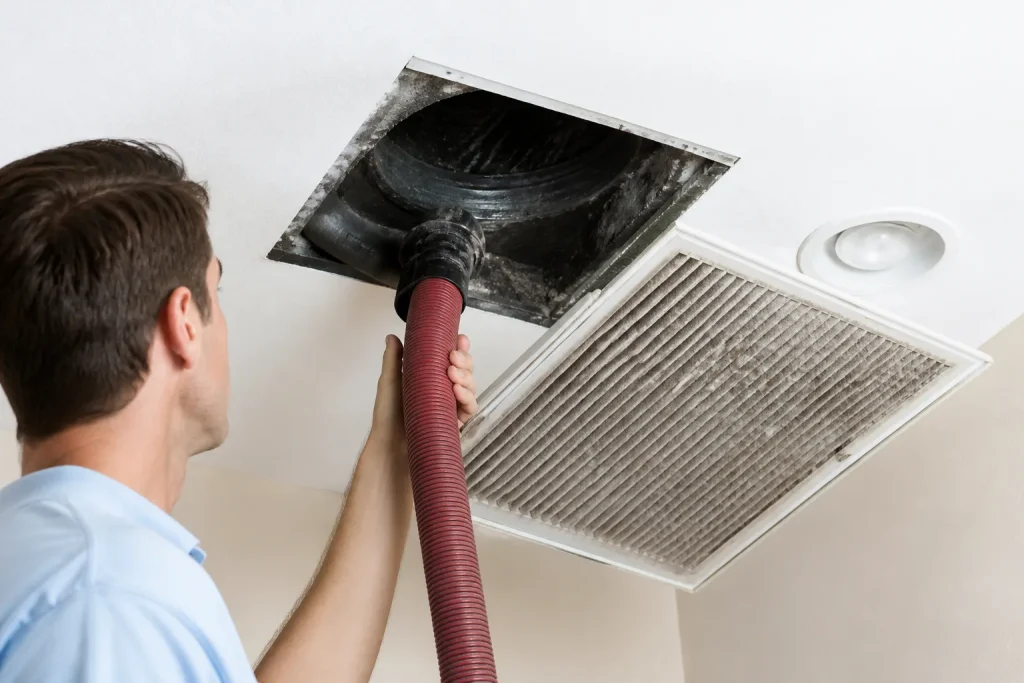
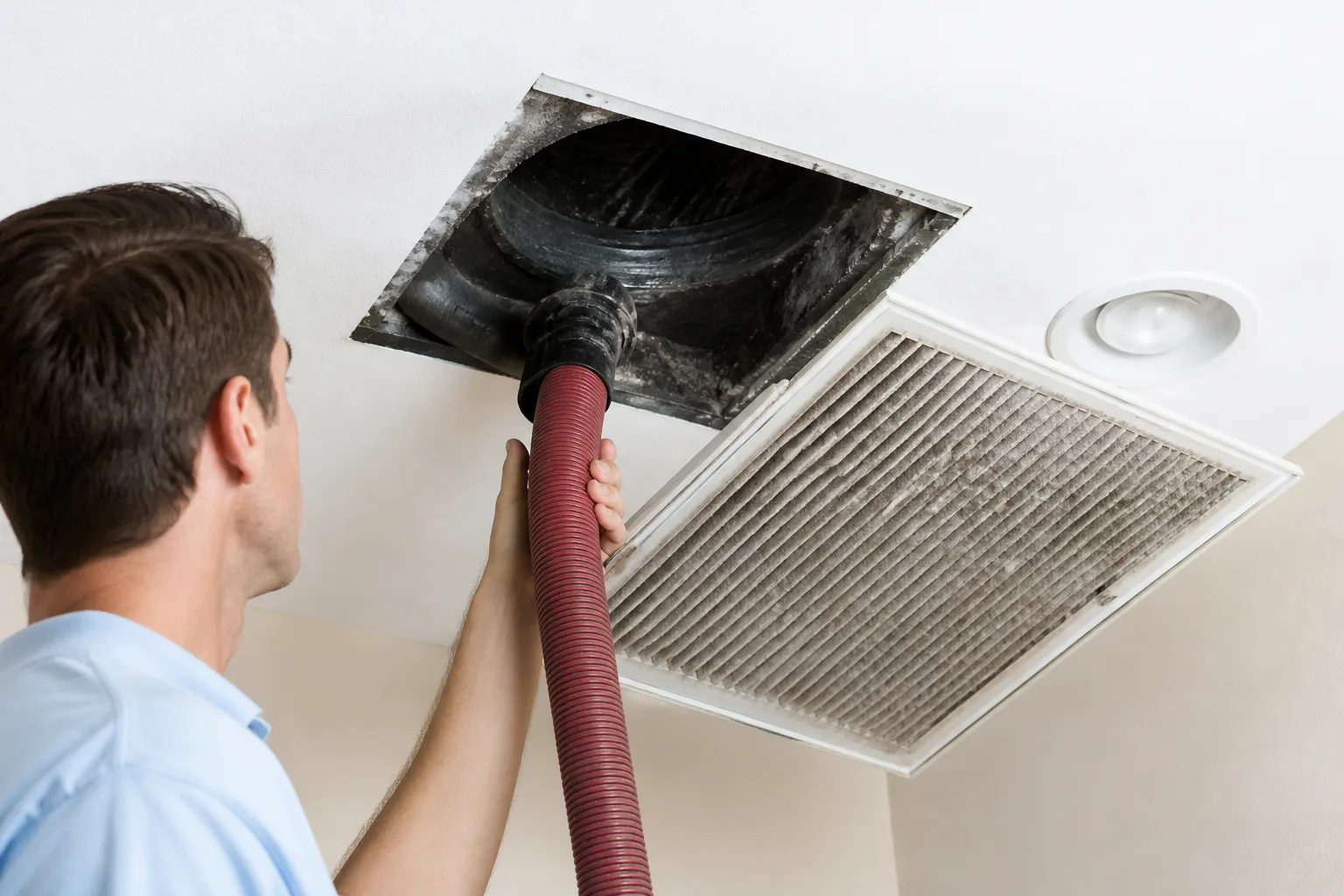
You can check your filter, read your registers, watch for condensation, and notice smells on your own. Where a trained technician earns their place is in the system itself – measuring static pressure, sealing leaks, inspecting the duct interior with the right equipment, and sanitizing where biological growth has taken hold. The tools matter: professional-grade Rotobrush and Nikro duct cleaning systems operate at a level that consumer shop vacuums can’t reach, and a technician who brings that kind of equipment can also diagnose what the dirty ducts are telling you about the system as a whole.
Our technicians have up to 13 years of experience, and the local pro we connect you with is licensed and insured as their state requires. Pricing is set per job with a written estimate agreed before work starts – no surprises once we’re on site. And you get before-and-after photos of your own ducts, so you can see exactly what was removed.
Related services in Capitol Hill: If your filter changes keep looking wrong, start with air duct cleaning. Persistent musty smells or a system that never feels clean can point to deeper contamination, making HVAC cleaning a useful next step. If your dryer has been taking longer to dry clothes or you’ve noticed lint gathering at the vent exterior, schedule dryer vent cleaning – a blocked dryer vent is a fire risk, not just an efficiency issue.
Key Takeaways
- Filter collapse inside 30 days signals duct leakage or filter bypass more than ambient dust.
- Speckling, flaking, or fuzz inside a register points to biological growth, not ordinary particulate – sanitizing matters.
- Uneven temperatures across a multi-story Capitol Hill home are a system-imbalance signal that dirty ducts amplify.
- A persistent musty smell in one zone is a contamination signal; the normal first-heat dusty smell isn’t.
- Condensation on supply boots in crawlspace-fed homes is an early warning worth acting on before cleaning turns into remediation.
- Cleaning alone is half the job – duct repair and sealing keeps the system from re-contaminating.
The Bottom Line
The signs of dirty ducts are usually quieter than most people expect. Filter load, register patterns, room temperature swings, localized smells, and condensation at the boots all speak before a visible dust plume does. If two or three of these ring true in your home, a professional inspection is worth the phone call – and it will tell you whether you’re looking at a cleaning job, a sealing job, or both. We draw on the diagnostic side of the trade because cleaning alone doesn’t solve systems that are working against themselves.
If you’re in Capitol Hill and want a straight answer on what’s happening in your ducts, Air Duct Cleaning Capitol Hill offers free estimates. Call (855) 970-9419. We answer 24/7. Fast dispatch from 7am to 7pm, Sunday through Friday.
Frequently Asked Questions
Look at your filter and register patterns first. A filter that dies inside 30 days, speckled debris inside a supply register, or a musty smell in one zone are signs you can verify yourself before calling anyone. A thorough inspection should include measuring airflow and looking inside the duct, not just a visual of the grille. Call (855) 970-9419 for a free estimate if you want a diagnosis rather than a sales pitch.
Usually no. The first-heat smell is dust burning off the heat exchanger after months of sitting idle, and it fades within a few cycles. A persistent musty or earthy smell that doesn’t fade, especially if it’s concentrated in one room, is the one that points to biological contamination inside the ducts. That distinction matters: the first-heat smell doesn’t need duct cleaning; the persistent localized one often does.
They can make it worse, but rarely on their own. Uneven temperatures are usually a system-imbalance issue first – undersized returns, poorly zoned ductwork, or blocked dampers. Debris buildup restricts airflow further and amplifies the imbalance. In Capitol Hill’s older multi-story homes, this is common because the original duct design predates the way rooms get used today. Cleaning resolves the restriction; sealing addresses the leak; and sometimes both are needed to see a meaningful improvement.
Most homes don’t need annual cleaning. A reasonable interval is every few years, and sooner if signs of contamination appear – visible growth inside a register, musty smells, or a filter that fails early. Crawlspace-fed homes in Capitol Hill’s wet climate may need closer monitoring because of condensation. The right interval depends on your system, not a one-size schedule.
If you’re unsure where your system stands, call (855) 970-9419 for a free estimate.
Written by the team at Air Duct Cleaning Capitol Hill.
Need Air Duct Cleaning Help?
Call Air Duct Cleaning Capitol Hill - the local pro we connect you with is licensed and insured, here with fast help in Capitol Hill.
(855) 970-9419